Does Pilates Help You Lose Weight? Here's the Honest Answer
Pilates can support weight loss, but the research suggests it changes your body composition more than it changes the number on the scale.

January 8, 2026 - Updated August 19, 2026
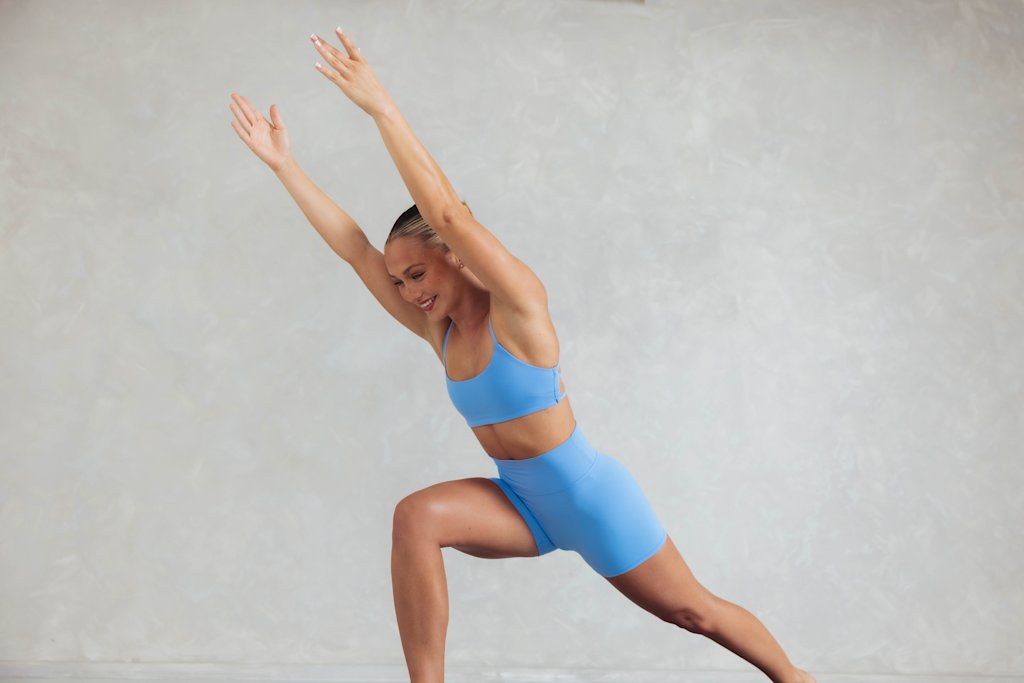
Pilates is one of the most popular training styles in the Sweat app, but it's also one of the most argued about.
Some people swear it transformed their body. Others say it doesn't burn enough calories to be worth it. Some say they feel stronger than ever from Pilates, others say it's not enough load to make continuous strength gains.
And if you've been showing up and doing Pilates several times a week and not seeing much change, these are very real things you start to question.
In short, yes, Pilates can absolutely support weight loss if that's a goal of yours (and it offers a heap of other amazing benefits), and research backs that up. But like any exercise routine, it works best when paired with good nutrition and a slight calorie deficit.
What the research actually says about Pilates and weight loss
Pilates can produce measurable change, and what's interesting is that the effect on body fat tends to be much larger than the effect on body weight.
A 2021 meta-analysis in Frontiers in Physiology pooled 11 randomized controlled trials covering 393 adults with overweight or obesity. On average, participants lost around 5 pounds (2.4kg) and dropped just over one BMI point. Body fat percentage, though, fell by more than four percentage points.
Basically, what that means is that people were losing fat while holding onto muscle (which is exactly the outcome most of us are after, even if we say our goal is "losing weight"). Unless you've got a fancy set of scales, how much you weigh doesn't actually tell you anything about changes in fat and muscle.
So if you're doing Pilates consistently and the number isn't budging, that doesn't mean nothing is happening.
How many calories does Pilates burn in a session?
In a study by the American Council on Exercise, a 50-minute mat Pilates session burned around 175 calories at beginner level and 254 calories at advanced level. The study used younger women averaging 138lb, and calorie-burn estimates vary by body weight and effort, so your own number will differ. Reformer and higher-intensity formats likely sit at the upper end, though this particular study only tested mat work.
That's a real number, and it's a modest one. For perspective, a banana is about 100 calories. The researchers concluded Pilates wasn't delivering much aerobic or calorie-burning benefit.
But please don't hear that and think it's bad news. Calorie burn is a really poor way to judge a workout, because it ignores everything Pilates is good at: building muscle, improving control and mobility, protecting your joints, and keeping you consistently active for years rather than weeks. The workout that keeps you coming back definitely beats the one that burns more but leaves you dreading the next session.
Why your nutrition does more of the heavy lifting than your workout
You've probably heard the saying a million times that you can't out-train a bad diet, and it's true.
If you're eating around 2,000 calories a day and burning 175 to 250 a few times a week with Pilates, it's simply much easier to create a small deficit through what's on your plate than through what happens in your workouts.
A healthy deficit should be slight and sustainable each week, and it usually looks like:
Balanced, filling meals with plenty of vegetables, fruit and fiber
A lean source of protein included in each meal to support muscle growth and maintenance
Portions that leave you satisfied rather than stuffed or starving
Movement you enjoy and can keep doing without burning out
There's another underrated way Pilates helps here, too. Every workout asks you to move with control, which can make you more aware of your body in general: your hunger cues, your energy dips, how a meal actually makes you feel an hour later. Calorie tracking has its place if you want to lose weight, but for many women, that newfound body awareness often ends up being more useful in the long run.
How often should you do Pilates to see a change?
Most studies showing changes in body composition use a pattern of three sessions a week, but that's not a concrete rule - it's more just a common number of workouts per week.
As we always say, the best workout routine is the one you can consistently stick to, but we recommend at least two Pilates sessions per week to see improvements, and noticeable change can take several weeks to a few months to show up depending on your starting point.
So think of three times a week as a routine that works, not a minimum you have to hit (or a limit you shouldn't exceed). If you can manage two, do two. If you're doing two Pilates sessions and two strength workouts - amazing.
The Physical Activity Guidelines for Americans recommend about 150 minutes of moderate movement a week, plus at least two muscle-strengthening sessions, and Pilates can cover a decent chunk of both.

How long before you notice results from Pilates?
In the research, eight weeks of consistent training was enough to produce measurable body composition change, but many people notice the less visible benefits well before that mark.
The earlier changes are the ones nobody photographs, like better balance, improved energy, climbing stairs with greater ease, a core that switches on immediately when you pick something up, and less nagging back pain. You start to feel stronger and more confident with Pilates moves that might have felt tough when you first started.
It's completely normal for the first month to feel like nothing visible is happening. Instead of thinking you need to go harder or change your routine, take it as a sign to be patient, notice other changes you're experiencing, and keep going.
Can Pilates help you lose belly fat?
Pilates can reduce belly fat, but not because it targets your abs.
Spot reduction isn't a thing. No matter what training style you're doing, you can't choose where your body loses fat from first (that's largely down to genetics). In the eight-week study above, waist and abdominal measurements did come down alongside overall fat loss, but that's the point. It's a by-product of overall fat loss, not Pilates exercises targeting a specific area.
What Pilates is genuinely excellent at is strengthening your deep core muscles, which changes how your midsection looks, feels and functions, and improves your posture in a way that often shows up before any changes in body composition.
Mat or reformer Pilates: does it matter for weight loss?
You can probably guess what we're going to say here. Pick the one you'll actually do consistently. Jetaya's Precision Pilates program in the Sweat app is super popular if you want full video-style mat Pilates you can follow along at home.
While reformer work adds adjustable spring resistance, letting you load your muscles more precisely to build strength, mat Pilates can be just as hard and is much more affordable. There isn't strong evidence that one beats the other for fat loss, so do whatever you enjoy more (or whatever fits your schedule and budget).
The training mix that works well for most women
We love everything Pilates has to offer, and if it's keeping you consistently active, we love that. But we always recommend including traditional strength training in your routine. This article explains why.
The 3-2-1 Method with Katie Martin is one of our most popular programs, with three strength workouts, two Pilates sessions and one run (or cardio of your choice) each week to give you a great balance. You could also do two strength workouts and two Pilates sessions, or a similar mix.
How to make Pilates work for weight loss
If weight loss is a goal, then regular Pilates becomes a powerful tool when paired with good nutrition and a slight calorie deficit.
Pilates has never been about chasing calorie burn at all costs. No workout should be about that. Focus on all the other benefits like building a strong, capable body and a routine you genuinely look forward to.
Erin is a writer and editor at Sweat with years of experience in women's publishing, the fitness industry, media and tech. She's passionate about the power of movement, and you can often find her on a yoga mat, a hike, a dance floor, in the ocean or the gym.
* Disclaimer: This blog post is not intended to replace the advice of a medical professional. The above information should not be used to diagnose, treat, or prevent any disease or medical condition. Please consult your doctor before making any changes to your diet, sleep methods, daily activity, or fitness routine. Sweat assumes no responsibility for any personal injury or damage sustained by any recommendations, opinions, or advice given in this article.
Fitness