Best Hip Mobility Exercises (And Why Hip Mobility Matters)
When your hips are tight, the rest of your body pays for it. Here are some of the best hip mobility exercises to keep you moving well, training harder, and staying injury-free.

April 16, 2026 - Updated April 16, 2026
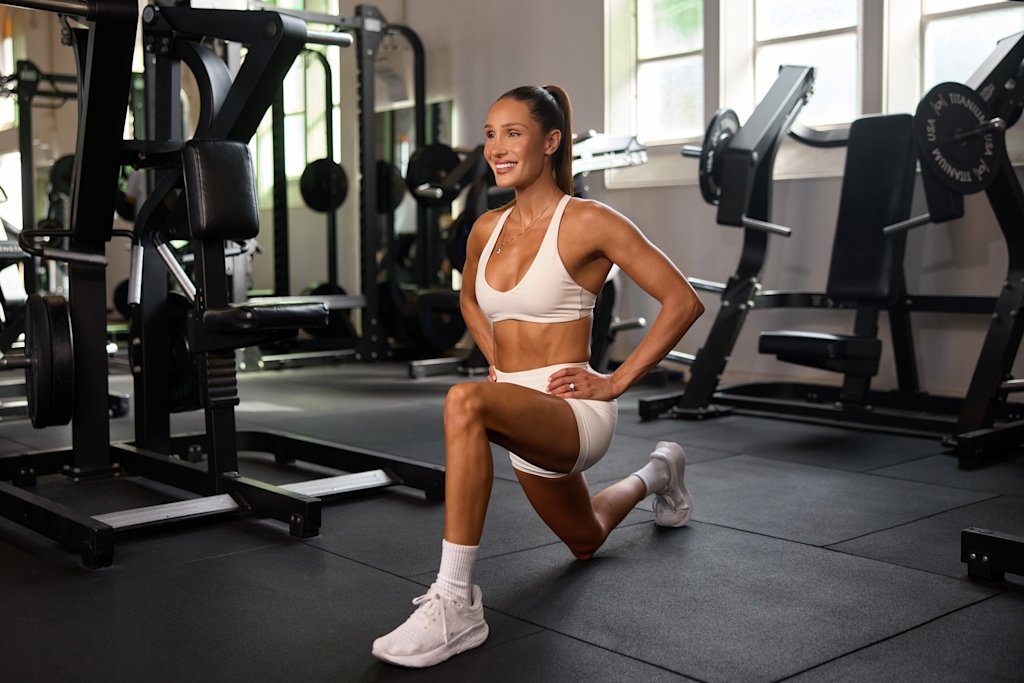
Let's talk about something that doesn't get nearly enough attention in most training routines: hip mobility. It's not the most glamorous topic or thing to work on, but if your hips aren't moving the way they should, you'd be surprised how much it affects everything else. Your squats, your running, your lower back, and even your seated posture during your workday can all start to suffer.
Hip mobility is basically how well your hip joint can move through its full range of motion. And for most of us, whether we're training five days a week or just getting started, it's not as good as it could be. Sitting for long stretches, skipping warm-ups or cool-downs, and just the general demands of life all contribute to hips that are tighter than they should be.
Luckily, hip mobility is super easy to work on. And the exercises aren't complicated. Here's everything you need to know.
Why hip mobility actually matters
Your hips are the centre of everything. They connect your lower body to your upper body and are involved in almost every movement you do, from walking to deadlifts to picking something up off the floor.
Good hip mobility means your body can move efficiently and distribute load the way it's meant to. When your hips are tight, other joints (usually your lower back and knees) have to compensate and take on stress they're not designed for. Over time, that adds up and takes a toll.
Here's what solid hip mobility supports:
Better technique in the gym. Squats, lunges and hip hinges all require adequate hip range of motion to be performed correctly. Better mobility means better form, better muscle engagement and better results.
Reduced injury risk. When your hips move freely, your knees and lower back don't have to overwork.
Improved posture. Tight hip flexors tend to pull your pelvis forward, which directly affects how you stand and move.
Faster recovery. Mobile hips mean less muscle tension and tightness after your workouts. You can come back and start another workout without feeling so stiff.
Better performance overall. Whether you're running, doing HIIT, or lifting, your hips do a lot of the work, and taking care of them will level up how your workouts and body feel.
Signs your hip mobility needs work
If you're trying to figure out if your hips need some extra love or not, here are some telltale signs your hip mobility could use some attention:
You sit for long periods. Even if you're active and working out several times a week, prolonged sitting can shorten and tighten your hip flexors, so you need to be more intentional about your mobility work.
You regularly deal with lower back aches. This is a big one. Restricted hip mobility is one of the most common contributors to lower back pain. If your hips can't move through their full range, your lumbar spine picks up the slack.
Your squats look or feel off. If your heels lift, your knees cave in, or you feel like you're falling forward, hip mobility (alongside ankle mobility) is often the culprit.
You feel tightness or pulling in the front of your hips. That nagging tension after leg day or a long run is often your hip flexors protesting.
You work out frequently. If you train a lot without incorporating dedicated mobility work, you can actually develop tightness over time, especially if your training skews heavily toward strength or high-impact cardio. Hip mobility exercises are really important as a preventative measure before you start to have issues.
Your running gait is off. Restricted hip extension changes how your leg moves through its stride, affecting efficiency and increasing injury risk.
If any of these sound familiar, it's nothing to panic about; take this as your cue to add some mobility work to your week.
The best hip mobility exercises
These exercises work across different aspects of hip mobility: hip flexor length, internal and external rotation, hip extension, and deep hip opening. You can use these as a warm-up before training, a standalone mobility session, or a cool-down after a workout. Aim to work through them slowly and with control. This isn't about pushing through pain and straining your body; it's about encouraging your body to move more freely over time.
Every workout in the Sweat app also has an optional warm-up and cool-down, so if your training is taxing on your hips, these types of movements will automatically be included for you!
1. 90/90 wipers
Why it works: This is one of the most effective exercises for improving both internal and external hip rotation. It targets the hip capsule directly and is a great all-round hip mobility move. We love wipers as a dynamic stretch, alternating sides for 30-60 seconds, but you can also hold it as a static stretch for 30-60 seconds on each side if that feels better for your body.
How to do it:
Sit on the floor with both legs bent at 90 degrees — one leg in front of you, one behind, both forming a right angle at the knee.
Sit up tall with your spine long. Your front shin should be roughly parallel to the top of your mat.
Keep both sit bones reaching toward the floor as much as possible.
Hold the position for 30–60 seconds, breathing steadily.
To deepen the stretch, hinge forward over your front leg with a long spine.
Switch sides and repeat.
2. Deep squat hold
Why it works: The deep squat is arguably the ultimate hip mobility test. It requires adequate hip flexion, external rotation, and ankle mobility simultaneously. Spending time hanging out in this position is incredibly effective.
How to do it:
Stand with your feet slightly wider than hip-width, toes turned out slightly.
Lower yourself into the deepest squat you can manage, keeping your heels on the floor.
If your heels lift, place a rolled mat or small weight plate under them for support while you build mobility.
Bring your hands together at your chest in a prayer position and use your elbows to gently push your knees out.
Keep your chest lifted and your spine long. Resist the urge to round forward, and if you feel your back rounding, reduce the depth of your squat to a place where your spine is long.
Hold for 30–60 seconds, breathing deeply.
3. Kneeling hip flexor stretch
Why it works: A deep low lunge directly targets your hip flexor muscles that tighten most from sitting and repetitive training. Essential for anyone who runs, cycles, or does a lot of lower-body strength work.
How to do it:
Start in a kneeling lunge position with your right foot forward and your left knee on the ground.
Stack your right knee over your right ankle.
Gently shift your hips forward until you feel a stretch through the front of your left hip and thigh.
Keep your torso upright and your core lightly engaged.
To deepen the stretch, raise your left arm overhead and gently lean to the right.
Hold for 30–60 seconds, then switch sides.
4. Pigeon pose
Why it works: A deep hip opener that targets the external rotators and glutes. It's particularly effective for releasing tension that builds up after running or heavy lower-body training.
How to do it:
Start in a high plank or tabletop position.
Bring your right knee forward and place it behind your right wrist, with your right foot angled toward your left hip. Your shin might not be fully parallel to the mat at first (or ever), and that's okay.
Extend your left leg straight behind you, with the top of your foot resting on the mat.
Square your hips toward the ground as much as possible.
Hold upright first, then slowly walk your hands forward and lower your torso toward the floor.
Hold for 60–90 seconds, breathing deeply, then switch sides.
5. World's greatest stretch
Why it works: This one lives up to the name. This is a multi-joint mobility move that opens the hip flexors, hip rotators, thoracic spine, and hamstrings in one flow. It's one of our faves to include in a warm-up before any training session.
How to do it:
Start in a high lunge with your right foot forward, right knee over ankle, left leg extended behind you.
Place both hands on the inside of your right foot.
Drop your right elbow toward the floor and hold for a breath.
Then rotate your right arm up toward the ceiling, following your hand with your gaze.
Return to the start, then step into the next rep.
Complete 5-8 rotations on one side before switching sides.
6. Fire hydrant
Why it works: Targets hip abduction and external rotation, which are often underdeveloped even in regular exercisers. Fire hydrants strengthen the glutes through the range of motion at the same time, so they are great as a standalone exercise or as a glute activation exercise. If you want more, you can also loop a short resistance band above your knees before you start.
How to do it:
Start on all fours with your hands under your shoulders, knees under your hips.
Keeping your knee bent at 90 degrees, lift your right knee out to the side as high as you can without rotating your hips or torso.
Pause at the top, then slowly lower back to the start.
Keep your core engaged and your spine neutral throughout.
Complete 12-15 reps on one side, then switch.
How often should you do hip mobility work?
The short answer: regularly. Even 5–15 minutes a few times a week makes a meaningful difference. Consistency beats intensity here. Five minutes daily will do more for your mobility than one 45-minute session once a fortnight.
Here's how to fit it in:
Before workouts: Use active mobility moves like the World's Greatest Stretch and 90/90 switches to prepare your hips for load.
After training: Longer holds like pigeon and the low lunge work really well for cool-down and recovery.
On rest days: A short dedicated mobility session is one of the best things you can do for long-term performance and joint health.
Mobility is a must
Instead of thinking about hip mobility as a nice bonus extra, we'd love for you to think of it as an essential foundation. Whether you're lifting heavy, smashing HIIT sessions, running, or just trying to move through daily life without that nagging lower back tension, your hips are involved in all of it.
Start with two or three of these exercises and build from there. You don't need a dedicated hour; you just need to be consistent. Your body will thank you for it.
A more empowered you starts with Sweat, and our editorial team is here to bring you the latest fitness tips, trainer recommendations, wellbeing news, nutritional advice, nourishing recipes and free workouts.
* Disclaimer: This blog post is not intended to replace the advice of a medical professional. The above information should not be used to diagnose, treat, or prevent any disease or medical condition. Please consult your doctor before making any changes to your diet, sleep methods, daily activity, or fitness routine. Sweat assumes no responsibility for any personal injury or damage sustained by any recommendations, opinions, or advice given in this article.
Fitness