Struggling With Pistol Squats? Here's Exactly How to Get There
Here’s the roadmap to nailing one of toughest (but most satisfying) lower body exercises.

March 17, 2026 - Updated March 17, 2026
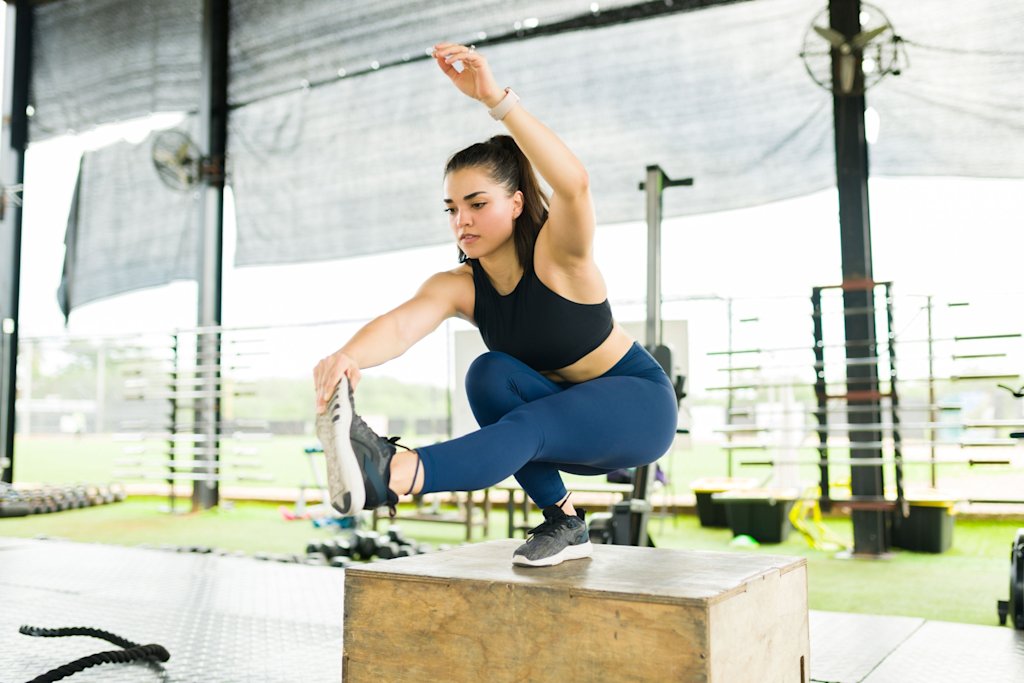
So many of us have had the exact same experience the first time we tried a pistol squat. Your heel lifted, your whole body wobbled and your lost your balance, or you just kind of... sat down on the floor and couldn’t get back up. It’s humbling.
But being humbled is a good thing. It means you’re trying something new, challenging yourself and working on new skills. Pistol squats are one of the best (and hardest) unilateral lower body exercises you can do, and working towards them will make you stronger, more mobile, and way more in control of your own body. You just need the right progressions to get there.
Why are pistol squats so difficult?
A pistol squat asks a lot of your body all at once. You're balancing all your bodyweight on one leg, lowering yourself all the way down until your hamstring touches your calf, while keeping your other leg extended straight out in front of you, then driving back up.
To nail a pistol squat, you need:
Balance and proprioception. Standing on one leg while moving through a full range of motion challenges your nervous system. Your body has to constantly make micro-adjustments to keep you upright, and like any balancing exercise, that takes practice. If you wobble easily when balancing on one foot, your balance probably will need some work to master pistols!
Ankle mobility. This is the sneaky one that catches most people out. To squat deep on one leg without your heel lifting, your ankle needs significant dorsiflexion (the ability to bring your shin forward over your foot). If your ankles are stiff or you have problems with your heels lifting in a normal squat (this can be from sitting at a desk, years of running, or just genetics), this alone can make a pistol squat feel impossible, even if you can tick off everything else. Ankle mobility is essential.
Hip flexor strength and flexibility. That front leg doesn't float up there by magic. Holding it extended while you squat requires both active hip flexor strength and enough hamstring flexibility to keep the leg straight. If you struggle to hold your leg straight out in front of you without leaning back, this could be holding you back.
Quad and glute strength. You're doing a full-depth single-leg squat. Your quads and glutes need to be strong enough to control the descent and power your entire bodyweight back up all on one leg, with no help from the other side. Lower body strength training is a must.
Core stability. When the wobbles kick in, or you start to lose your balance, a strong torso is essential to finding your steady centre again.
In short, a pistol squat demands a high level of strength, mobility, balance, and coordination all at once. If any of these areas are weaknesses, that’s where your focus should be.
What are pistol squats actually good for?
Beyond personal satisfaction, pistol squats offer genuinely useful benefits.
Unilateral strength. In the same way that most of us have one arm that’s stronger than the other, most of us have a dominant leg that compensates in bilateral exercises like regular squats. Pistol squats force each leg to work independently, which helps identify and correct any strength imbalances, which matters for your long-term strength progression and injury prevention.
Functional movement. Getting up from the floor, stepping off a kerb, climbing stairs… so much of daily movement is essentially single-leg work. Pistol squats build the strength and stability that make everyday movement feel easier and safer as you age.
Knee and hip health. Unless you’ve got knee issues, the idea that it’s dangerous for your knees to squat deeper than 90 degrees is generally a myth. When done progressively and with good form, deep single-leg squats build resilience, strength and mobility in your knee and hip joints. Work your way up slowly and check with a physio first if you’re worried about your knees.
No equipment needed. We love a bodyweight movement that's genuinely challenging. Pistol squats are a brilliant travel-friendly, equipment-free way to keep your lower body training progressing.
Pistol squat progressions: Your step-by-step plan
Work through these in order, adding 2-3 sets of your current progression level to your lower body sessions, at a point when you feel properly warmed up but still fresh enough to give it some effort. You don’t want to practice at the end of your workout when you’re already fatigued!
1. Ankle mobility work
Before anything else, get your ankles moving. Incorporate some calf stretches, deep squat holds (with heels elevated on a plate to start if you need), and general ankle circles.
To test your ankle mobility, you can also try this simple drill: Stand facing a wall, toes about 10cm away, and drive your knee forward to touch the wall without lifting your heel. If you can't reach, you've found your limiting factor. Doing this daily can help improve ankle dorsiflexion.
2. Box pistol squats
If you can’t do a full pistol squat yet, use a box, bench or chair. Stand on one leg and lower yourself down to sit on the surface behind you, keeping the other leg extended out in front of you. Focus on controlling the descent rather than just dropping. The box takes away the fear of the full range while you build single-leg strength and balance. As you get stronger, lower the surface.
3. Assisted pistol squats
Hold onto a suspension trainer (like a TRX), a squat rack, or even a door frame with both hands. Use just enough support to counterbalance yourself through the full range of motion. This lets you practice the pattern and build the strength through the whole movement without needing to be strong enough to do it unsupported yet.
4. Eccentric pistol squats
Stand on one leg and slowly lower yourself all the way down to the bottom position, then place your elevated foot on the floor and use two feet to stand back up. This builds strength and confidence through the full range without requiring you to produce the force needed to stand up unassisted. Aim for a 3–5 second descent.
From progression to mastery
Finally, be patient with yourself. Depending on where you're starting from, it can take anywhere from a few weeks to a few months to nail a full pistol squat.
Regardless of how long it takes, every step of the progression is building something useful: better ankle mobility, more single-leg strength, improved balance, and a more resilient body.
Erin is a writer and editor at Sweat with years of experience in women's publishing, the fitness industry, media and tech. She's passionate about the power of movement, and you can often find her on a yoga mat, a hike, a dance floor, in the ocean or the gym.
* Disclaimer: This blog post is not intended to replace the advice of a medical professional. The above information should not be used to diagnose, treat, or prevent any disease or medical condition. Please consult your doctor before making any changes to your diet, sleep methods, daily activity, or fitness routine. Sweat assumes no responsibility for any personal injury or damage sustained by any recommendations, opinions, or advice given in this article.
Fitness