Running Technique: The Form Cues That Make Running Feel Easier
Simple, coach-backed running form tips to help you run more efficiently and comfortably.

July 6, 2026 - Updated July 6, 2026
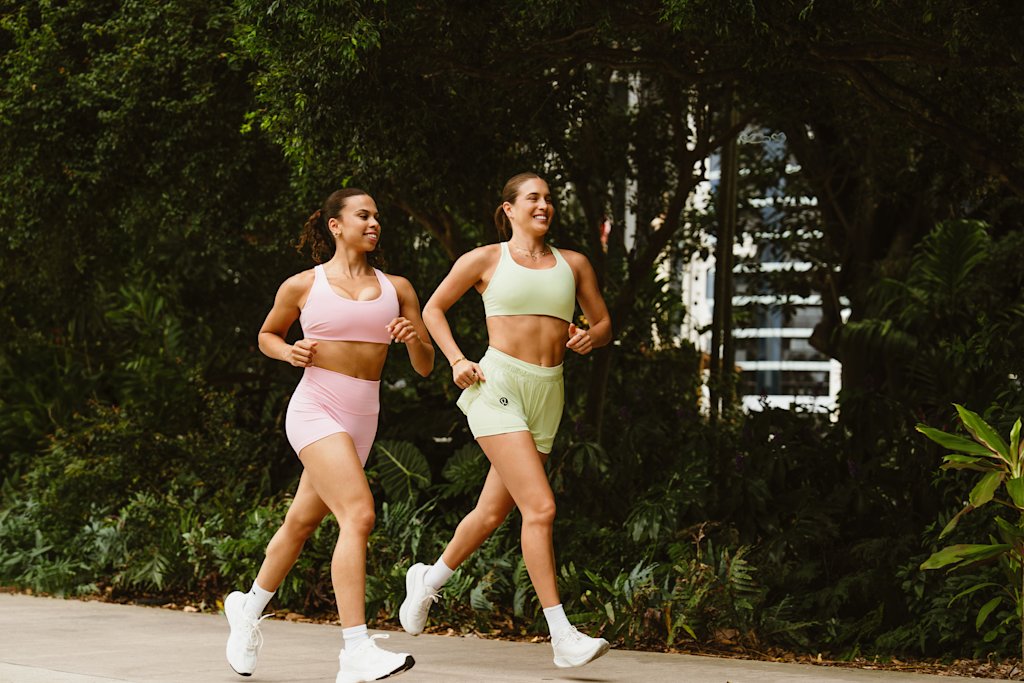
Running isn't easy. It asks a lot of your body and mind. But if all of your runs feel harder than you think they should, or you're getting weird niggling pains, it's potentially not your fitness that's the problem.
For most people, the issue is efficiency. Small things, like where your foot lands or how your arms move, can drain your energy without you even realising it. Fix one or two of them, and the same run at the same pace can genuinely feel easier.
As Sweat coach Britany Williams puts it: "The more efficient you are, the less energy you waste, and the easier your run will be and feel."
Pick one or two cues from this guide, try them on your next run, or hit play on one of the audio-guided runs in the Sweat app, and see what changes. You don't need to fix everything at once.
Why running technique matters more than most people realise
Simply put, running economy just means how efficiently your body uses energy when you run. The smoother your form, the less energy you burn, which means less effort, less fatigue and a lower risk of overuse injuries. Research published in Sports Medicine Open identifies biomechanical efficiency as one of the key factors influencing running economy, alongside muscle strength and neuromuscular coordination.
It's worth knowing upfront that there is no single perfect running form. Everyone is built differently and moves slightly differently, but the guided runs and strength workouts in Brit and Katie's running programs are designed to help take your runs from average to amazing.
"Everyone is going to have their individual nuance. This isn't about fitting you into a rigid box; it's about enhancing the movement patterns your body naturally does," says Brit.
Working on your form can slowly transform how each run feels.
"Over time, session after session, step after step, your body will find comfort in this sport," explains Katie. When you've nailed your form, she says your runs will feel smooth rather than forced.
"You're not fighting your body with every step. Your breathing feels controlled for the pace you're running. You feel strong through the hips and core. Your footstrike feels light and quiet rather than heavy and slappy."
Run tall and lead with your whole body
A lot of runners hinge forward at the hips, with the torso tipping ahead. What you actually want is a full-body lean starting from the ankles, so everything from your feet through to your shoulders tilts gently forward in the direction you're moving.
Try it standing still: lean forward from your feet without bending at the hips. That sense of forward propulsion, with your whole body moving as one unit, is the aim.
Brit describes what good form looks like in practice: "You know how you look at a professional runner and they just look so smooth? That smoothness is efficiency, and it's exactly what we're after."
Katie says it can also help to think about running tall to improve your posture. "Imagine a string pulling you upwards through the crown of your head with every step."
Where your feet land is more important than how they land
"Heel striking has gotten quite a bad reputation over the years, but most recreational runners are heel strikers, and that's nothing we need to rush out to change," Brit says. "What matters more is where your foot lands in relation to your body."
When your foot lands far out in front of you, it acts like a brake. When it lands underneath your hips, you keep your momentum and your stride stays light. A 2011 study in Medicine & Science in Sports & Exercise found that shortening stride length so the foot lands closer to the body reduced impact forces by up to 20%.
Think shorter, quicker steps rather than long-reaching ones. Running quietly is usually a sign you're moving well.
"Land under your hips," says Katie. "Think quick, light steps rather than reaching forward."
Relax your upper body and your run will thank you
Tension in your shoulders, arms and hands wastes energy, and tends to get worse the more tired you get. A 2025 study in the Annals of Biomedical Engineering confirmed that active, front-to-back arm swing reduces total metabolic energy consumption compared to restricted arm movement.
A few quick checks:
Shoulders: down and away from your ears. Katie's coaching cue: "Relax your shoulders. Periodically check in and drop any tension."
Arms: front to back, not crossing the midline of your body. "Drive your elbows back. This often improves arm swing more naturally than thinking about the hands" says Katie.
Hands: loose and slightly cupped. Britany's cue: "Think about holding a raw egg and not wanting to crack the shell."
Head: neutral and forward-facing. As Katie puts it: "I like to keep my gaze looking forward and down at the diagonal, that way I can keep my head up but still watch the ground in front of me."
Start small and build from there
Good running form isn't about perfection and it shouldn't make you feel anxious that you're not doing it right. It's simply about small adjustments that make running feel more sustainable.
"Form cues are reminders to keep in mind when your run starts to not feel smooth. Don't try to fix everything at once," Brit says.
Start with one cue, see what changes, listen to what feels good in your body, and keep building. You've got this.
Erin is a writer and editor at Sweat with years of experience in women's publishing, the fitness industry, media and tech. She's passionate about the power of movement, and you can often find her on a yoga mat, a hike, a dance floor, in the ocean or the gym.
* Disclaimer: This blog post is not intended to replace the advice of a medical professional. The above information should not be used to diagnose, treat, or prevent any disease or medical condition. Please consult your doctor before making any changes to your diet, sleep methods, daily activity, or fitness routine. Sweat assumes no responsibility for any personal injury or damage sustained by any recommendations, opinions, or advice given in this article.
Fitness