The Muscle Breakdown: What Your RDLs Should Be Working
Romanian deadlifts are a powerhouse move for your glutes, hamstrings and even your core.

January 14, 2026 - Updated January 14, 2026
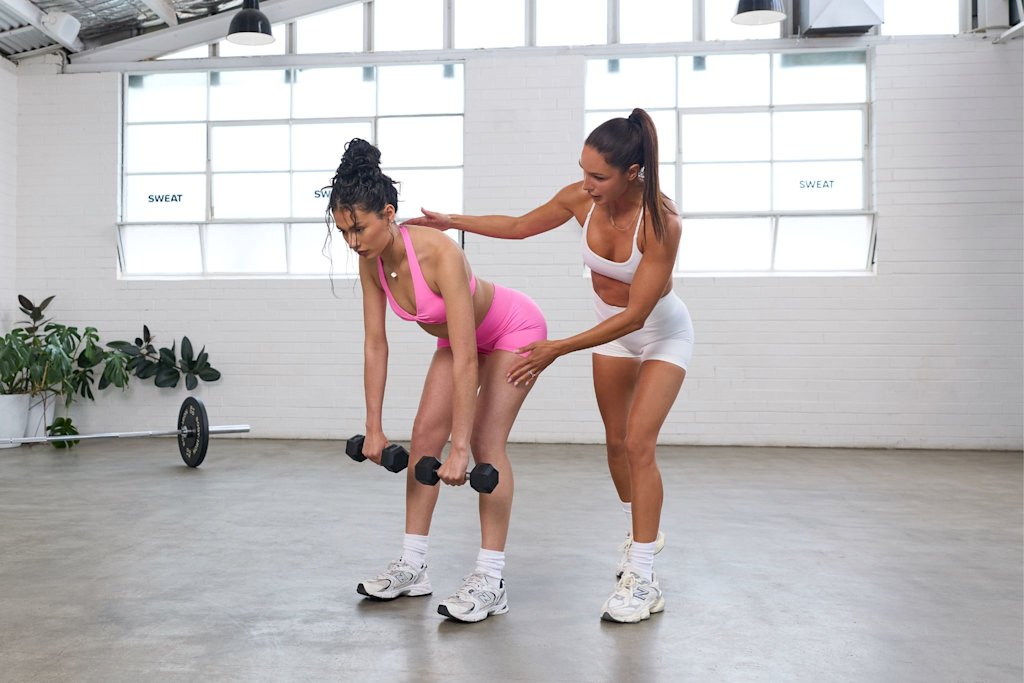
If RDLs are programmed into your workout and you’re not totally sure what they’re supposed to be working or where you should feel it, you’ve come to the right place.
Romanian deadlifts look pretty similar to traditional deadlifts, but they work your body in a different (and very intentional) way, making them a staple move for building strong, sculpted posterior chain muscles.
What is an RDL (Romanian deadlift)?
Like a traditional deadlift, an RDL is still a hip-hinge exercise where the movement comes almost entirely from your hips, not your knees. If it’s your first time doing any kind of deadlift, think about pushing your hips back towards the wall behind you, rather than your bum lowering towards the floor as you would in a squat.
With an RDL, your weights (whether it’s a barbell, dumbbells or kettlebell) also don’t touch the floor - they stop around your shins. As a result, your knees only remain slightly bent throughout the movement.
This means your glutes and hamstrings are kept under tension throughout the entire set, while keeping your spine neutral and core engaged. No matter what equipment you’re using, RDLs are always about control, not speed.
What muscles do RDLs work?
The primary muscles worked are:
Glutes: Your glutes are the star of the show in an RDL and are most active when you drive your hips forward to stand back up.
Hamstrings: That deep stretch you feel down the backs of your thighs as the weight lowers towards your shins is your hamstrings lengthening as you control the descent, which is key for strength and muscle growth.
Secondary muscles that get a workout:
Adductors (inner thighs): Your inner thigh muscles are more of the supporting act in RDLs, working in the background to keep your hips and pelvis stabilised throughout each rep.
Erector spinae (lower back): Your lower back is definitely involved in any deadlift for support and stabilisation, however, it should never be the primary area where you feel it, otherwise you're setting yourself up for injury. Most of the grunt work should be coming from your legs and glutes.
Core: Even though you’re not necessarily feeling the burn in your abs, deadlifts are an incredible exercise for core strength. Your core should be engaged (like you’re bracing for a punch) during every lift to stabilise the movement and protect your spine.
And finally, the upper-body support muscles:
Lats: These are the muscles down the sides of your back, which work to keep the weight close to your shins.
Traps & rhomboids: These are the muscles on the tops of your shoulders, which support good posture and shoulder positioning.
Forearms & grip: These muscles can get surprisingly fatigued during RDLs, as they are constantly working to hold the weight.
Do RDLs target different muscles than traditional deadlifts?
Yes! While they look similar, RDLs and traditional deadlifts target different muscles.
RDLs put more emphasise on your glutes and hamstrings and keep your posterior chain (the muscles down the backside of your body) under constant tension because the weight never touches the floor until your set is complete. We love RDLs because they provide targeted glute training without needing super heavy weights.
Traditional deadlifts still have a big glute and hamstring focus, but they involve more knee flexion and a stronger full-body push from the floor since you lower the weight completely to the ground. This movement brings your quads into play a lot more and allows you to lift heavier loads.
Better form, better results
If your goal is stronger glutes, more defined hamstrings, and better overall movement patterns, RDLs deserve a permanent spot in your program. Focus on slow, controlled reps and really feel every muscle doing its thing.
When it comes to results, it’s not just about lifting the weight; it’s about which muscles are doing the work.
Erin is a writer and editor at Sweat with years of experience in women's publishing, the fitness industry, media and tech. She's passionate about the power of movement, and you can often find her on a yoga mat, a hike, a dance floor, in the ocean or the gym.
* Disclaimer: This blog post is not intended to replace the advice of a medical professional. The above information should not be used to diagnose, treat, or prevent any disease or medical condition. Please consult your doctor before making any changes to your diet, sleep methods, daily activity, or fitness routine. Sweat assumes no responsibility for any personal injury or damage sustained by any recommendations, opinions, or advice given in this article.
Fitness