The Best Strength Training Routine? New Research Goes Hard On Progressive Overload
The ACSM's biggest strength training update since 2009 affirms everything we preach about consistency and progressive overload.

June 22, 2026 - Updated June 22, 2026
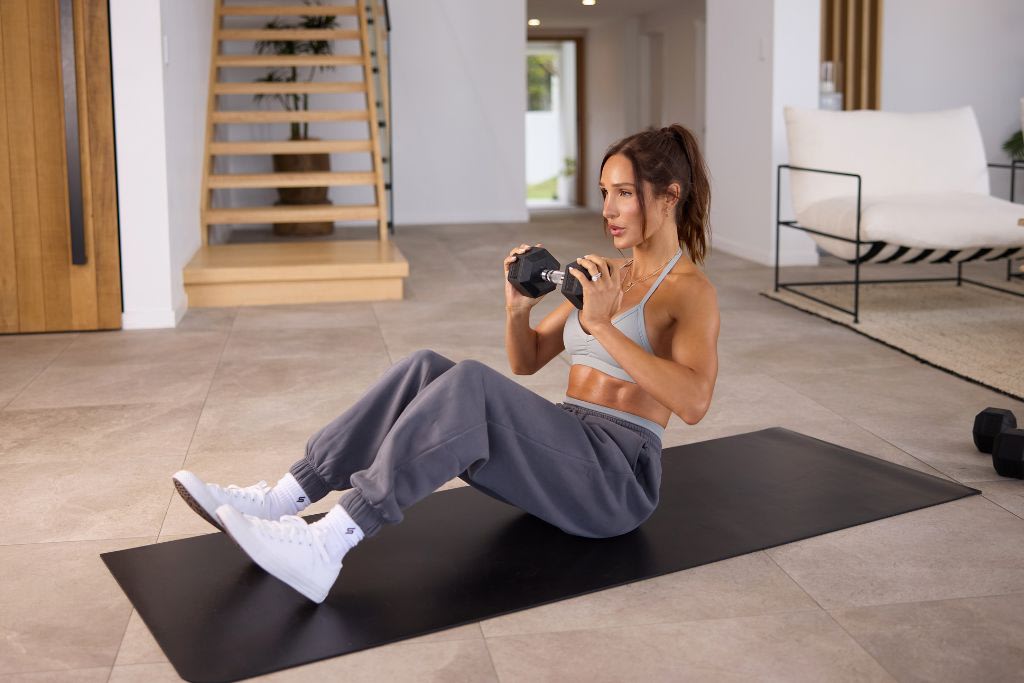
If you've ever worried that your strength training routine isn't complex enough, the latest guidance from the American College of Sports Medicine (ACSM) might be exactly what you need to hear. And if you're lifting 3kg dumbbells and thinking that's enough, this might also be what you need to hear.
What are the new ACSM strength training guidelines?
The ACSM's first major update to its resistance training guidelines since 2009 reinforces something we've been saying for years. Consistency and progressive overload beat complexity any day of the week.
The review analysed 137 systematic reviews covering more than 30,000 participants, making it one of the most comprehensive summaries of resistance training evidence to date. It reinforces that progressive resistance training works extremely well (no surprises there), while showing that many of the things people obsess over have much less impact than they're often claimed to.
The update reviewed decades of research to determine how different resistance training approaches affect strength, muscle growth, power and physical function. While some training variables can obviously be adjusted depending on your goals and lifestyle, the biggest takeaway (clearly stated in their conclusion) wasn't about the "best" workout split, program, equipment or the perfect number of reps.
It was this: "Healthy adults should perform progressive resistance training, with variable prescription consistent with our findings, to improve muscle function, size, and physical performance."
The keyword that comes up over and over (which we will continue harping on about) is progressive. You need your strength training to get progressively more challenging over time if you want to build strength and muscle.
The best routine has two things: progression and consistency
One of the most refreshing findings from the review is that there isn't a single "right" way to strength train. In fact, the researchers highlighted the importance of individualising programs based on your goals, preferences, experience level and lifestyle.
You can train in the fanciest gym in the world with every machine under the sun or you can train in your dirty garage with an adjustable set of dumbbells. It doesn't matter where you are or what you're using; if you're progressively and consistently challenging your muscles, you're good. That means you're using weights that feel heavy to you, you increase your weights as your strength improves, and you're strength training at least twice every week.
The benefits to be gained are definitely worth it
The other thing we won't stop talking about is the benefits of strength training. Lifting weights isn't just about looking stronger - it's about improving your overall health, performance and longevity.
Compared with doing no resistance training, they reported that participants consistently improved:
Muscle strength
Muscle size (hypertrophy)
Power
Muscular endurance
Contraction speed
Balance
Gait speed
Overall physical function
The stuff that doesn't matter so much
What we also love about this review is all the things that didn't consistently influence strength training results.
You don't have to train to failure every set.
You can use machines or free weights and still see results.
You don't get better results just because you're doing more complicated exercises.
It's not hugely important whether you're doing straight sets, supersets or something else.
You don't need to stress too much about periodisation, time under tension, or the length of your rest periods.
That's not to say these methods never matter or are useless. They can be useful tools for experienced lifters or athletes with specific goals, or even just a fun way to shake things up. But for most people, they're far less important than simply showing up and nailing the basics: consistency and progression.

So what actually matters?
While there's no one-size-fits-all approach to fitness and many different programs can help you get stronger, the review identified a few principles that can help maximise results.
Train at least twice a week
The researchers recommend working all major muscle groups at least two times per week. That doesn't mean you need to live in the gym or train every day.
Two full-body strength sessions each week are enough to build a strong foundation and support meaningful improvements in strength and muscle function. If you can do more than that, amazing.
Keep challenging yourself over time
The review continues to support the principle of progressive overload. The most effective way to do that is to increase the weight you lift, but if you don't have access to heavier weights, you can also overload your muscles with more reps, extra sets, or by progressing to a more challenging exercise variation. All Sweat strength programs are designed to get progressively more difficult, and you can use the weight-logging feature to track your progress.
Progressive overload isn't about making every single workout harder than the last, but about making sure that over a series of weeks and months, your muscles stay challenged. You can't expect to keep making progress if you keep doing the same thing.
Match your training to your goals
Different approaches can definitely be useful if there's something specific you're trying to achieve. For example:
Heavier loads tend to be most effective for maximising strength
Higher overall training volume supports muscle growth
Moderate loads moved explosively can help improve power
A well-structured strength program will naturally incorporate a balance of all of these principles to help you build strength, muscle mass and power, but you can also hone in on one area depending on your goals.
Why this matters for women
For years, many of us have been led to believe strength training had to look a certain way: hours in the gym, complicated workout splits or exercises, or constantly pushing ourselves to exhaustion in every session. This guidance tells a different story.
You can use fancy equipment, but you don't need it. You can follow advanced training methods, but you don't need them. And you definitely don't need to punish yourself with every workout.
What matters most is super simple: Show up. Train consistently. Keep challenging yourself over time.
That's what the evidence says delivers results.
Erin is a writer and editor at Sweat with years of experience in women's publishing, the fitness industry, media and tech. She's passionate about the power of movement, and you can often find her on a yoga mat, a hike, a dance floor, in the ocean or the gym.
* Disclaimer: This blog post is not intended to replace the advice of a medical professional. The above information should not be used to diagnose, treat, or prevent any disease or medical condition. Please consult your doctor before making any changes to your diet, sleep methods, daily activity, or fitness routine. Sweat assumes no responsibility for any personal injury or damage sustained by any recommendations, opinions, or advice given in this article.
Fitness