8 Of The Best Tricep Exercises For Stronger Arms
The best tricep exercises for every head of the muscle, with a home and a gym option for each and helpful form tips.

December 14, 2018 - Updated November 4, 2026
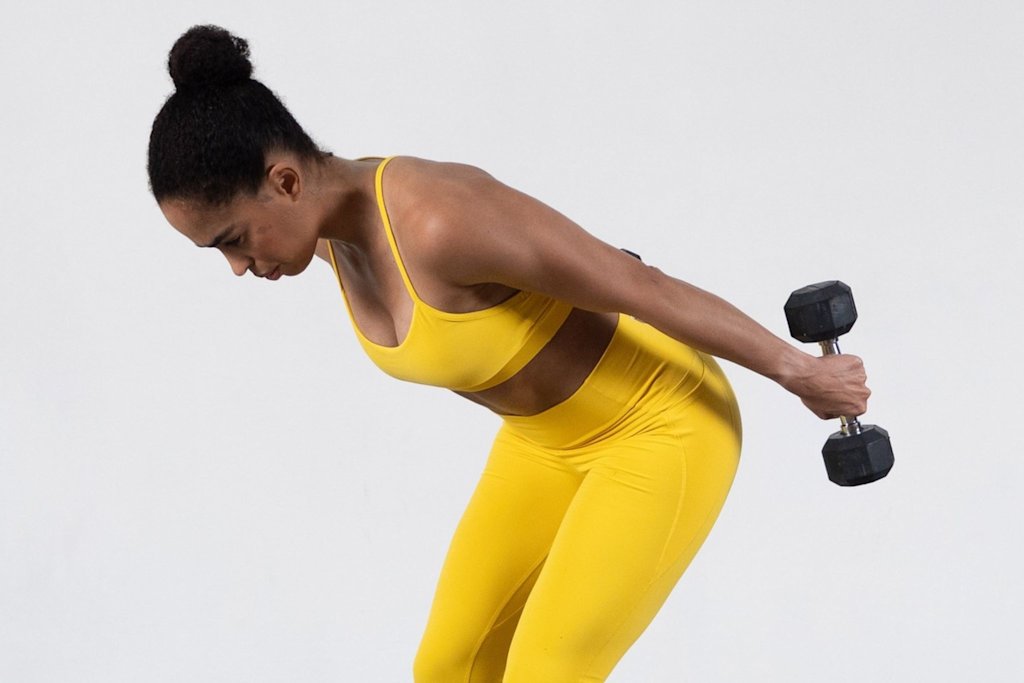
Every push-up you do, every time you push yourself up off the floor or lift your carry-on into an overhead bin, the backs of your arms are doing the work. The best tricep exercises are diamond push-ups, dips, kickbacks and overhead extensions, plus pushdowns, skull crushers and close-grip presses if you train at a gym. Pick two or three, do them twice a week, and you'll feel the difference in your push-ups within a month or two.
If you're trying to "tone" your triceps, know that spot training is a myth, and anyone promising to "tone your bingo wings" in 10 minutes a day is selling something.
What these exercises do is build strength and muscle, and that's what changes how your arms look and feel over time. If you're already doing push-ups, presses and dips in a Sweat program, your triceps are working. These moves are for when you want to give them more attention.
If you only have time for one, make it an overhead extension. We'll explain why below.
Why strong triceps are worth the effort
Your triceps make up about two-thirds of the muscle in your upper arm, according to Harvard Health. Their main job is straightening your elbow, which means they help with every pushing movement you do, in the gym and out of it. Think pressing a heavy door open, pushing a stroller uphill, getting up off the floor after playing with your kids, or lifting a suitcase onto a shelf.
Stronger triceps also make the rest of your strength training easier. They help in every push-up, bench press and shoulder press, so when your triceps tire first, those exercises stall. Building them up is often what gets you from push-ups on your knees to push-ups on your toes.
Your triceps have three heads, and that changes which exercises you pick
"Triceps" means three heads, and each one attaches a little differently:
Long head: runs down the back of your arm and is the only head that starts on your shoulder blade, crossing your shoulder joint. It gets the biggest stretch when your arm is overhead.
Lateral head: sits on the outside of your upper arm. It's considered the strongest of the three and does a lot of the work when your arms are down by your sides.
Medial head: sits deeper, underneath the other two, and works in almost every tricep movement.
Every tricep exercise works all three heads. You can't fully isolate one. What changes is the emphasis, and the position of your arm is what shifts it.
That's where the research gets useful. In a 2023 study, adults trained one arm with overhead extensions and the other with arms-down pushdowns for 12 weeks. The overhead arm built about 40% more triceps muscle overall, and about 45% more in the long head, even though it was lifting lighter weights (Maeo et al., 2023). That's why an overhead move is the one we'd never skip!
The other study worth knowing came from the American Council on Exercise, which tested eight tricep exercises on 15 women. Close-hand (diamond) push-ups made the triceps work the hardest, with kickbacks and dips close behind (ACE, 2011). That study measured how hard the muscle works, and the 2023 one measured how much it grew, so our list includes the winners from both.
The 8 best tricep exercises at a glance
| Exercise | Equipment | Head it emphasises | Home or no-gym option |
|---|---|---|---|
| Tricep or diamond push-up | None | Lateral and medial | No gym needed |
| Tricep dip | Bench or chair | Lateral and medial | A sturdy chair or the edge of the couch |
| Tricep kickback | Dumbbells | Lateral and medial | Dumbbells, water bottles or a resistance band |
| Dumbbell overhead extension | One dumbbell | Long | Any weight you can hold with both hands, or a resistance band |
| Skull crusher | Barbell or dumbbells, bench | Long and lateral | Dumbbells lying on the floor |
| Close-grip press | Barbell or dumbbells, bench | All three (plus chest) | Dumbbell floor press |
| Tricep pushdown | Cable machine and rope | Lateral and medial | Resistance band anchored high |
| Cable overhead extension | Cable machine and rope | Long | Resistance band under your foot |
Tricep push-up
Tucking your elbows in tight to your sides shifts more of a push-up's work from your chest to your triceps, and you can do it anywhere. The diamond push-up (where your hands come even closer together to form a diamond between your thumbs and forefingers), made the triceps work harder than any other move in the ACE study.
Start on your hands and knees with your hands on the mat directly under your shoulders, about shoulder-width apart, fingers pointing forward.
Step your feet back so your body forms a straight line from your head to your heels, or stay on your knees with a straight line from your head to your knees. Brace your core.
Bend your elbows to lower your chest towards the mat, keeping your elbows close to your sides and pointing back, not out. Your upper arms should brush past your ribs.
Push through your palms to straighten your arms and return to the start. Repeat.
Muscles worked: triceps (especially the lateral and medial heads), chest, front of your shoulders and core.
Form tip: if your hips sag or your elbows flare out wide, the move has become a regular push-up and your chest is taking over. Drop to your knees or elevate your hands until you can keep your elbows tucked for every rep.
When you're ready for more: start with your hands on a bench or step (incline tricep push-ups are easier), progress to your knees, then your toes. After that, bring your hands closer together into a diamond push-up, slow the lowering phase to three seconds, or add a weight plate on your upper back if a training partner can place it safely.
Tricep dip
Dips came a close second in the ACE study, and all you need is something sturdy to push up from. A bench, a step, a chair that won't slide or the edge of the couch all work.
Sit on the edge of the bench with your hands next to your hips, fingers pointing forward towards your feet.
Shift your glutes forward off the bench so your arms are supporting your weight. Keep your knees bent with your feet flat on the floor to start.
Bend your elbows to lower your body towards the floor until your elbows reach about 90 degrees. Keep your elbows pointing straight back behind you and your back close to the bench.
Push through the heels of your hands to straighten your arms and lift back up, using your arms rather than pushing with your legs. Repeat.
Muscles worked: triceps (especially the lateral and medial heads), plus the front of your shoulders and chest.
Form tip: only go as low as your shoulders feel comfortable. If you feel a pinch at the front of your shoulder, shorten the range. Your shoulders should stay down and back, away from your ears.
When you're ready for more: straighten your legs, then raise your feet onto a second bench. A negative tricep dip is a great middle step: take a full three seconds to lower, then push back up in one. In the gym, progress to parallel bar dips, then to a weighted dip belt.
10 REPS
Tricep kickback
Kickbacks tied with dips in the ACE study and only need light dumbbells, so they're a great home option. Heavy isn't the point here; control is.
Hold a dumbbell in each hand with your palms facing in. Stand with your feet hip-width apart and a soft bend in your knees.
Hinge forward from your hips until your torso is close to parallel with the floor, keeping your back flat.
Bend your elbows to bring the dumbbells up beside your ribs, with your upper arms tucked against your sides. This is your starting position.
Keeping your upper arms still, straighten your elbows to push the dumbbells back behind you until your arms are straight. Pause and squeeze.
Bend your elbows to return to the start. Repeat.
No dumbbells? Use two full water bottles, or stand on a resistance band and hold one end in each hand.
Muscles worked: triceps (especially the lateral and medial heads).
Form tip: the most common mistake is swinging the weight or needing to use momentum because the weight is too heavy. If your upper arm drops or your shoulder rocks to get the dumbbell up, go lighter. You can also rest one hand and knee on a bench for more support and do one arm at a time.
When you're ready for more: go heavier, add a one-second hold or a pulse at the top of every rep, or try a cable kickback at the gym, which keeps tension on your triceps the whole way through.
30 Secs
Dumbbell overhead tricep extension
If you only do one tricep exercise, make it an overhead extension. Having your arms overhead puts the long head on a stretch, and that's why overhead extensions built about 40% more muscle than pushdowns in the 2023 study. All you need is one dumbbell.
Hold one dumbbell with both hands, cupping the top end with your palms. Stand with your feet hip-width apart, or sit on a bench if you'd like more support for your back.
Press the dumbbell straight up above your head so your arms are beside your ears. This is your starting position.
Keeping your upper arms still and close to your head, bend your elbows to lower the dumbbell behind your head until you feel a stretch in the backs of your arms.
Straighten your elbows to press the dumbbell back up. Repeat.
No dumbbell? Any weight you can hold securely with both hands works, or stand on one end of a resistance band and hold the other end behind your head.
Muscles worked: triceps, with the most emphasis on the long head.
Form tip: keep your ribs down and your core braced. If your lower back arches as the weight goes overhead, sit down, go lighter, or brace harder before each rep.
When you're ready for more: go heavier, or switch to one dumbbell in each hand and work one arm at a time, which shows up any difference between your sides.
Skull crusher
The name sounds scarier than the move. You're lowering the weight towards your forehead, but not into it, and starting light makes it very manageable if you're worried about dropping it.
Lie on a flat bench with your feet on the floor. Hold a barbell (or a dumbbell in each hand) with an overhand grip, hands about shoulder-width apart.
Press the weight up so your arms are straight above your chest. This is your starting position.
Keeping your upper arms still, bend your elbows to lower the weight towards your forehead, or just behind your head for a bigger stretch.
Straighten your elbows to lift the weight back up above your chest. Repeat.
Muscles worked: triceps, especially the long and lateral heads.
Form tip: keep your elbows pointing at the ceiling, not flaring out to the sides. An EZ bar or two dumbbells with your palms facing each other is often kinder on your wrists and elbows than a straight bar.
When you're ready for more: go heavier, or let your upper arms drift slightly back behind your head so the long head works through a bigger stretch. At home, you can do this on the floor with dumbbells.
Close-grip press
This is the tricep exercise you can load the heaviest, because your chest and shoulders help. It's a great way to build pressing strength for the rest of your training.
Lie on a flat bench with your eyes under the barbell and your feet flat on the floor.
Grip the bar with your hands just inside shoulder-width apart (narrower than a regular bench press, but not touching). Unrack the bar so it's directly above your chest.
Lower the bar to your lower chest, keeping your elbows close to your sides at about a 45-degree angle or less.
Press the bar back up until your arms are straight. Repeat.
At home, try a dumbbell floor press: lie on the floor with a dumbbell in each hand, palms facing each other, and press them up with your elbows tucked. The floor stops your elbows at the right depth.
Muscles worked: all three heads of the triceps, plus your chest and the front of your shoulders.
Form tip: a grip that's too narrow strains your wrists without adding anything for your triceps. Keep your wrists stacked over your elbows. Use a spotter or safety bars if you're lifting heavy.
When you're ready for more: go heavier, gradually, following progressive overload. Not sure where to start? Here's how to choose your weights.
Tricep pushdown
The classic gym tricep move. It's super easy to learn and lets you lift heavier as you get stronger, but because your arms are down by your sides, it works the long head less than overhead moves do. That's why we always pair it with an overhead exercise.
Attach a rope to a cable pulley set at the top of the machine. Stand facing it, about half a step away, with your feet hip-width apart.
Hold one end of the rope in each hand with your palms facing in. Pull it down until your elbows are bent at about 90 degrees and tucked into your sides. This is your starting position.
Keeping your upper arms still, straighten your elbows to push the rope down towards your thighs, spreading the ends of the rope apart at the bottom.
Slowly let the rope come back up to the starting position. Repeat.
At home, loop a resistance band over the top of a door with a door anchor and do the same movement.
Muscles worked: triceps, especially the lateral and medial heads.
Form tip: if you're leaning your body weight over the rope to get it down, the weight is too heavy. Stand tall, keep your elbows pinned to your sides and let only your forearms move.
When you're ready for more: go heavier, or try a straight bar or V-bar attachment for a different grip.
Cable overhead tricep extension
This is the gym version of the overhead extension. The cable keeps tension on your triceps through the whole movement, including the stretch at the bottom, and it's easy to go heavier in small steps.
Attach a rope to a cable pulley set at the bottom of the machine. Hold one end of the rope in each hand with your palms facing in, then turn to face away from the machine.
Bring the rope up and over your head so your hands are behind your head and your elbows are bent and pointing up towards the ceiling. Stand tall with your feet hip-width apart, or stagger them if you need more balance. This is your starting position.
Keeping your upper arms still and close to your ears, straighten your elbows to press the rope up until your arms are straight above your head.
Slowly bend your elbows to lower the rope back behind your head until you feel a stretch in the backs of your arms. Repeat.
At home, stand on one end of a resistance band, hold the other end behind your head with both hands and press up.
Muscles worked: triceps, with the most emphasis on the long head.
Form tip: your elbows will want to flare out and drift forward as you get tired. Keep them pointing up and close to your head, and your ribs down, so the stretch stays on your triceps rather than your lower back.
When you're ready for more: go heavier, or swap the rope for a single handle and work one arm at a time. You can also set the pulley high instead, face away from the machine with a staggered stance and lean your torso forward, pressing the rope forward and up. Try this version if lifting the rope over your head from the low pulley feels awkward on your shoulders.
How to fit tricep exercises into your week
Two tricep exercises, twice a week (included in your upper body sessions) is plenty for most people: one overhead move for the long head and one arms-down move for the lateral and medial heads. For example, overhead extensions and tricep push-ups at home, or cable overhead extensions and pushdowns at the gym.
Aim for 2 to 3 sets of 8 to 15 reps, using a weight that makes the last 2 or 3 reps of each set feel hard while your form stays clean and you feel every rep in the back of your arm (rather than another muscle helping out). When you can do the top of that rep range easily, it's time to go heavier.
You can add them to the end of an upper body or full body session, or pair them with bicep exercises for a quick arm finisher. If you're short on time, say a 30-minute lunch break, three rounds of tricep push-ups and overhead extensions back to back takes about 10 minutes. Leave at least a day between sessions so your triceps can recover, especially if you've also done push-ups or presses.
Stronger arms start here
Pick one overhead move and one arms-down move from this list, do them twice a week and go a little heavier whenever the last few reps start to feel easy. If you'd rather have it all planned for you, every strength program in the Sweat app builds in tricep work alongside the rest of your upper body, with video demos from your trainer for every move.
A more empowered you starts with Sweat, and our editorial team is here to bring you the latest fitness tips, trainer recommendations, wellbeing news, nutritional advice, nourishing recipes and free workouts.
* Disclaimer: This blog post is not intended to replace the advice of a medical professional. The above information should not be used to diagnose, treat, or prevent any disease or medical condition. Please consult your doctor before making any changes to your diet, sleep methods, daily activity, or fitness routine. Sweat assumes no responsibility for any personal injury or damage sustained by any recommendations, opinions, or advice given in this article.
Fitness