Should You Be Taping Your Mouth At Night? Here's What Actually Happens
Mouth taping has been touted for a range of health benefits. Here’s how true they are.

February 5, 2026 - Updated February 5, 2026
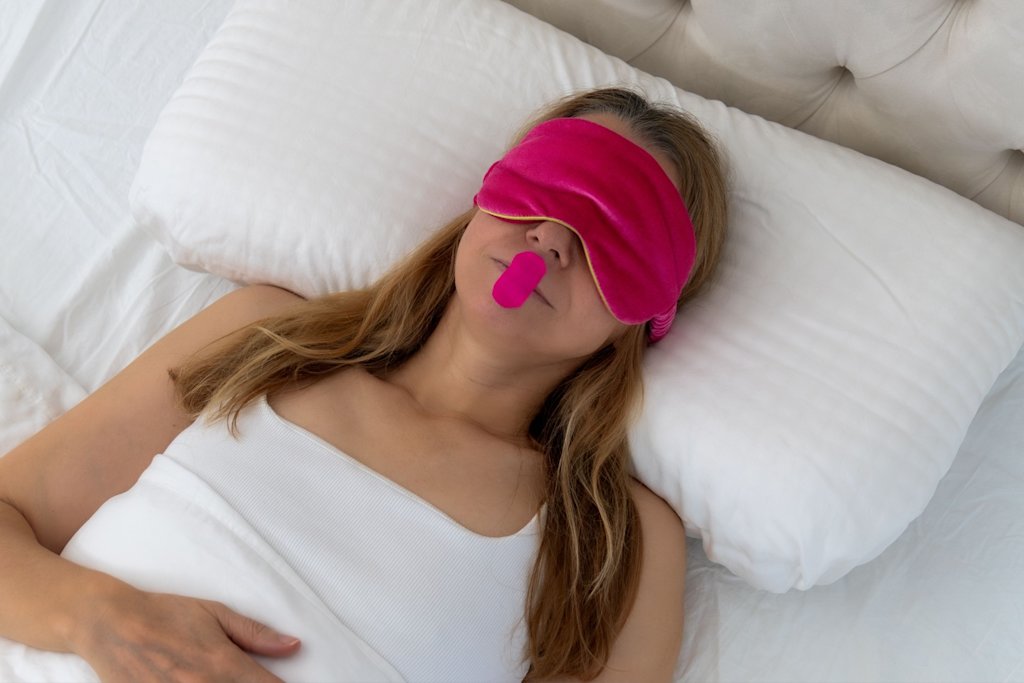
Mouth taping has been trending for a while now, with everyone from wellness influencers to serious athletes claiming it's transformed their sleep, boosted their recovery, and even changed their face shape (spoiler: let's pump the brakes on that last one).
If it’s actually backed by science, hand us the tape, but we wanted to know what actually happens when you slap a piece of tape across your lips before bed. Here’s the lowdown.
Why are people taping their mouths shut, and what does the science say?
The basic premise of the trend is simple: mouth taping is meant to encourage nasal breathing while you sleep instead of mouth breathing. You can use a specialised tape (or just surgical tape) to gently keep your lips closed overnight, forcing your body to breathe through your nose.
People are trying it for a bunch of different reasons, so we checked whether those benefits are backed by evidence.
True: Nose breathing really is better for you.
This part isn't controversial. As the Cleveland Clinic explains, your nose is designed to be your primary breathing organ. When you breathe through your nose, you warm the air, filter it, activate your diaphragm more effectively, produce nitric oxide (which helps oxygen delivery to your muscles), and generally breathe more efficiently.
True: Mouth taping can improve your sleep quality.
Research has shown that nasal breathing can indeed support better sleep. While we need more large-scale studies on mouth taping specifically, if a little piece of tape leads to better breathing habits, you might notice a positive knock-on effect on your sleep, energy and recovery.
True: Mouth taping can reduce snoring.
If your partner has ever elbowed you at 3am (or you’re the one doing the elbowing), this one might resonate. 2022 research found that mouth-taping during sleep improved snoring and the severity of sleep apnea in mouth-breathers by about half. It might not be a foolproof solution for everyone (and you should always get the green light from your doctor), but given it’s cheap and easy, it’s definitely worth a try.
True: Nasal breathing is better for dental health.
Sleeping with your mouth open can lead to a dry mouth, which increases the risk of cavities and gum disease. Not exactly the wellness glow any of us are going for.
Unclear: Nasal breathing is better for athletic performance and recovery.
Some athletes swear that nasal breathing improves their oxygen efficiency, reduces inflammation, and speeds up recovery between training sessions. If you notice a difference - amazing - but we need more research on this one.
False: Nasal breathing will reshape your face as an adult.
Claims that how you breathe can change the structure of your face are based on studies of children and teenagers whose facial structures are still developing, and some research even questions that! As an adult, you’re not so likely to see a transformation.
Important things to consider
Before you raid the first aid kit, let's talk safety. Mouth taping isn't appropriate for everyone, so here’s what you need to know:
Don't try it if you have sleep apnea or any breathing disorders. Seriously. If you haven't been evaluated by a doctor, taping your mouth could interfere with your ability to breathe properly at night.
If you have nasal congestion, clear it first. You need to be able to breathe freely through your nose for this to work, otherwise, you might be reducing your oxygen intake. If you're stuffed up from allergies or a cold, wait til you’ve recovered.
Start slowly. If the idea of taping your mouth makes you nervous, try it during a short nap first, or tape part of your mouth initially while you’re awake to see how it feels and make sure you’re comfortable.
Use the right tape. Don't just grab any old duct tape. Use specialised mouth tape designed for this purpose, or at minimum, hypoallergenic surgical tape that's gentle on your skin and you can easily peel off.
Listen to your body. If you wake up gasping for air, feeling anxious, or notice any other negative symptoms, take the tape off immediately. Mouth taping should never feel like a struggle.
Sweet dreams
Look, mouth taping isn't going to magically transform you into a superhuman athlete overnight. But if you're someone who mouth-breathes during sleep, struggles with snoring, or feels like your sleep quality could use a boost, it might be worth experimenting with - provided you get the green light from your doctor first.
Think of it as another tool in your recovery toolkit, right alongside proper hydration, stretching, and actually getting enough sleep in the first place.
If you do decide to try it, start conservatively, pay attention to how your body responds, and adjust accordingly.
Erin is a writer and editor at Sweat with years of experience in women's publishing, the fitness industry, media and tech. She's passionate about the power of movement, and you can often find her on a yoga mat, a hike, a dance floor, in the ocean or the gym.
* Disclaimer: This blog post is not intended to replace the advice of a medical professional. The above information should not be used to diagnose, treat, or prevent any disease or medical condition. Please consult your doctor before making any changes to your diet, sleep methods, daily activity, or fitness routine. Sweat assumes no responsibility for any personal injury or damage sustained by any recommendations, opinions, or advice given in this article.
Wellbeing