Is Pilates Actually Effective For Building Muscle?
First, you need to figure out if you’re trying to build strength, mass or endurance.

March 6, 2026 - Updated March 6, 2026
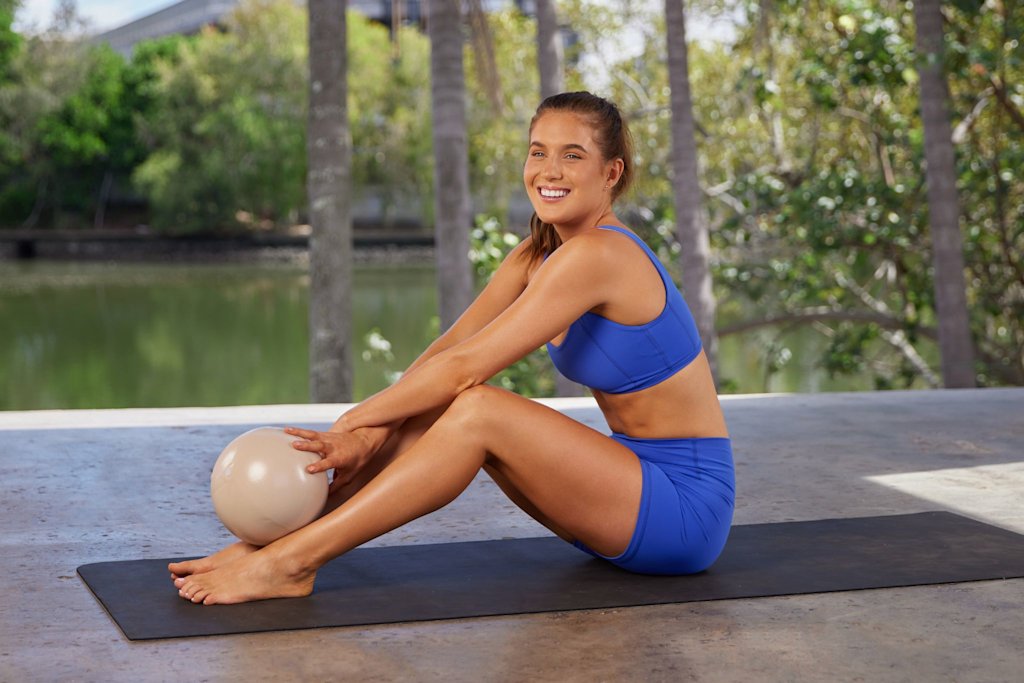
On the one hand, we’ve got the camp of people who believe Pilates is the holy grail of fitness and a total game-changer for building strength, and then we have another group who fire back that as beneficial as Pilates might be, you need to lift heavier weights if you want to build muscle.
So who's right? Does Pilates build muscle?
The short answer: yes, but with an asterisk. And that asterisk is about whether you mean building muscular strength, endurance or mass.
So, does Pilates build muscle?
Pilates is, by definition, a form of strength training. It uses resistance (your bodyweight, spring tension on a reformer, or additional dumbbells, wrist weights, or ankle weights) to challenge your muscles. And when your muscles are challenged, they adapt and get stronger. That's the basic principle behind all forms of strength training.
But here's the important distinction: building muscular strength, endurance, and mass (known as hypertrophy) are different things. Research has shown that Pilates is solid at building muscular endurance and can improve your strength if you challenge yourself enough, but it can be more limited at building mass or size.
The checkbox you need to tick to achieve muscle hypertrophy is progressive overload — meaning you gradually increase the load or volume on your muscles over time so they have to grow to keep up. It’s simple and straightforward (but not necessarily easy) to do with weight training. Achieving this with Pilates can be harder.
The reformer springs, while a great tool, provide variable resistance that doesn't always allow for the consistent, measurable overload your muscles need to grow in size. And mat Pilates has an even lower ceiling if you’re using bodyweight, light dumbbells or ankle weights. If you’re doing Pilates religiously and feeling like your strength and endurance are improving, but you're not seeing much in the way of muscle gains, this is likely why.
How to accelerate your Pilates gains
Please don't mistake "doesn't maximise hypertrophy" for "doesn't do much." We love Pilates, and it offers a wide range of benefits, but if building muscle mass is one of your goals, you’ll also benefit from including weight lifting in your routine. For a program that combines both, The 3-2-1 Method is one of our most popular, with three strength workouts, two Pilates sessions, and one cardio session each week.
And if you want to squeeze even more out of your Pilates sessions, here’s what we recommend.
Add external resistance
This is the single most effective thing you can do. Resistance bands, ankle weights, and dumbbells can all be incorporated into mat Pilates to increase the load on your muscles beyond what your bodyweight alone provides. Even light ankle weights during leg work or a resistance band during glute bridges can ramp up the difficulty. On the reformer, you can level up by adding more springs or choosing a more challenging spring.
Slow down your tempo
Moving slowly through exercises increases the amount of time your muscles are under tension, which is a key driver of both strength and hypertrophy. Pilates is never about rushing, so focus on slow and controlled movement and feeling that spicy burn build.
Work to real fatigue
If building muscle is a goal, you need to push closer to the point where completing another rep feels genuinely hard. That doesn't mean sloppy form or injuring yourself (good technique is non-negotiable), but it does mean pushing through the burn when your mind wants to give up.
Focus on the mind-muscle connection
One of Pilates' greatest strengths is its emphasis on conscious muscle activation and mind-body connection. This is genuinely useful for building strength and engaging the correct muscles, both during your Pilates sessions and any other strength workouts you do.
Prioritise compound movements
Not all Pilates exercises are created equal for muscle development. Basing your workouts around compound exercises that work multiple large muscle groups at once (lunges, squats, and plank variations for example), will give you a bigger return.
Track your progression
Progressive overload requires that the difficulty increases steadily over time, which means you need to know where you started and what you did (which is where Pilates can get murky). Keep a simple note on your phone to keep track of things like dumbbell weight, number of reps, spring selection, or how hard it felt. If nothing is changing week to week, that's your signal to increase the resistance, slow the tempo, or add extra reps or time.
Be consistent and patient
Strength adaptations take time regardless of the training modality. Research generally shows that noticeable results from a new exercise programme start to show after 6–8 weeks, with more significant changes emerging over 3–6 months of consistent training. Show up regularly, progress steadily, and trust the process.
The dream team training duo
The good news? You don't have to choose. Pilates and strength training are excellent partners, and the people who combine them tend to move better, get injured less, and enjoy their training more.
Pilates improves so many aspects of your strength training: body awareness, core stability, posture, and control. When you train with better alignment and deeper muscle activation, your compound lifts become both safer and more efficient. You're recruiting the right muscles, not compensating with the wrong ones.
Meanwhile, strength training provides the progressive overload that Pilates can't. Add them together and you get a body that's strong, stable, mobile, and built to last.
Erin is a writer and editor at Sweat with years of experience in women's publishing, the fitness industry, media and tech. She's passionate about the power of movement, and you can often find her on a yoga mat, a hike, a dance floor, in the ocean or the gym.
* Disclaimer: This blog post is not intended to replace the advice of a medical professional. The above information should not be used to diagnose, treat, or prevent any disease or medical condition. Please consult your doctor before making any changes to your diet, sleep methods, daily activity, or fitness routine. Sweat assumes no responsibility for any personal injury or damage sustained by any recommendations, opinions, or advice given in this article.
Fitness