8 Of The Best Lower Back Stretches To Ease Tightness And Stiffness
Tight lower back? Try these 8 gentle stretches, with step-by-step instructions, helpful form tips and ideas for when you're ready to level up.

October 2, 2026 - Updated October 2, 2026
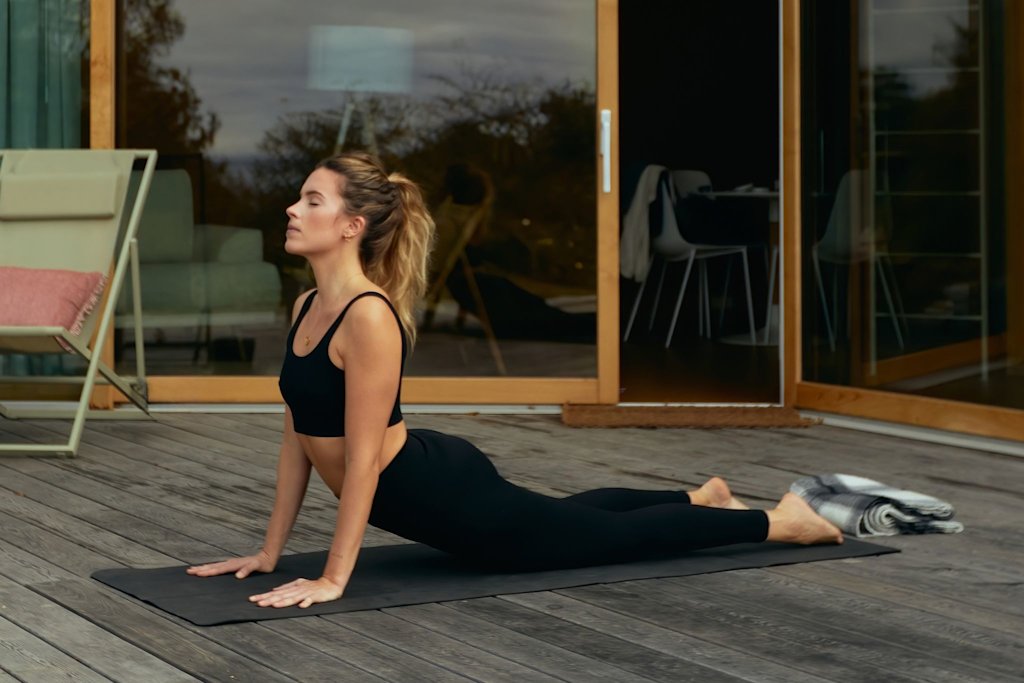
If your lower back feels tight after a long day at your desk, a big workout or a few hours in the car, even just a few minutes of stretching can feel SO good.
Stretching alone usually isn't the long-term fix if you've got consistent lower back pain or stiffness - that's usually a sign to see a physio or an indication that the muscles around your back (like your glutes, core and hips) need more strength and mobility, NOT that your back needs to be stretched harder.
Yes, stretches can definitely help you feel looser in the moment, and they're a restorative way to start or wind down your day, but building strength is what helps your back cope with everything you ask of it. If your back tends to ache after leg day in particular, our guide to lower back pain after squats is worth a read too.
And if your pain is ongoing, sharp, getting worse, travels down your leg, or comes with numbness or tingling, please skip the stretches and see a doctor or physiotherapist. The same goes if you've recently hurt your back. Harvard Health also notes that if you have sciatica, certain stretches can aggravate your pain, so it's worth getting the all-clear from a professional first.
With that said, gentle movement is one of the best things you can do for a back that just feels tight and stiff. Mayo Clinic notes that exercise often helps to ease back pain and prevent further discomfort. Here are eight moves we love that help do exactly that.
Why your lower back might be feeling tight
There's rarely just one reason, but these are a few of the most common culprits:
Sitting for long periods. Hours at a desk or on the couch keep your hips bent and can leave your hip flexors feeling short and tight. Harvard Health recommends taking regular breaks from sitting to get up and move around.
Tight glutes and hamstrings. These muscles attach to your pelvis, so when they're tight, they can affect how your lower back feels. That's why we always recommend completing your post-workout cool-down, even if it feels boring and like a waste of time, and our glute stretches are a great companion to this list.
Changes to your training. A new program, a heavier weight or a big jump in volume can leave your back feeling stiff while your body adapts.
Stress and poor sleep. We totally get it. When life is busy, tension tends to show up in your body, and your back is a very common place for it to land. Sometimes you literally just wake up and your back hurts from sleeping in a funny position.
How to get the most out of these stretches
You might notice that not every move on this list targets your back directly, and we've also thrown a strengthening exercise into the mix. Harvard Health recommends a lower-back stretching and strengthening routine that targets your back, abs, glutes, and upper legs, because ALL of these muscles help support your spine.
You don't need any equipment for these, just a yoga mat or a folded towel on the floor. A pillow or cushion is handy too, for support under your knees or hips if you need it.
Move slowly. Ease into each position, and never bounce or drop quickly into a stretch. A stretch should feel like a gentle pull, not pain.
Breathe. Slow, deep breaths help your muscles relax into each stretch. If you notice yourself holding your breath because it's THAT uncomfortable, back off a little.
Hold for 20 to 30 seconds, and repeat on both sides where it applies.
Stop if anything hurts. Mild discomfort as a muscle lengthens is normal. Sharp, pinching or shooting pain is your cue to stop.
We recommend working through these in order, as they move from the gentlest stretches to the ones that ask a little more of your back, but depending on how your body feels on the day, you do you. You can do them first thing in the morning, after a workout or before bed.
Child's pose
Start on your hands and knees on your mat, with your knees about hip-width apart (or a little wider if that feels better for your hips) and your big toes touching behind you. Slowly sit your hips back towards your heels, walking your hands forward along the floor as you go, until your arms are stretched out long in front of you and your forehead is resting on the mat. If the floor feels a long way away, rest your forehead on a cushion or yoga block instead.
Let your chest sink towards the floor and breathe slowly, focusing on sending each breath into your back so you can feel your ribs expand. Hold for 30 seconds to a minute.
Muscles worked: lower back (erector spinae), lats, glutes and hips.
Form tip: If your hips don't reach your heels, that's completely fine. Pop a pillow between your hips and heels so you can fully relax into the stretch rather than holding yourself up.
When you're ready for more: walk both hands over to one side of your mat to add a stretch through the side of your body, hold, then walk them to the other side. You can also gradually build up to holding the stretch for 90 seconds.
Cat-cow
Start on your hands and knees in a tabletop position, with your wrists directly underneath your shoulders and your knees directly underneath your hips. Your back should be flat, like a table (hence the name).
As you breathe in, let your belly drop towards the floor while you lift your chest and tailbone and look forward or up. This is "cow". As you breathe out, press the floor away with your hands, tuck your tailbone under and round your back up towards the ceiling, letting your head relax down towards the floor as you look towards your navel. This is "cat". Keep moving slowly between the two positions, letting your breath set the pace, for 8 to 10 rounds.
Muscles worked: erector spinae, abs, upper back and neck.
Form tip: Try to move one section of your spine at a time, starting from your tailbone, rather than just bending at your lower back. If your wrists feel uncomfortable, make soft fists or lower down onto your forearms.
When you're ready for more: once cat-cow feels easy, start building strength in the same position with a bird dog, where you start in a tabletop position and then extend your right arm forward and left leg back. This is one of the moves Physiopedia lists for strengthening the multifidus and erector spinae, two muscles that play an important role in keeping your spine stable. When that feels comfortable, add ankle weights or hold a light dumbbell in your reaching hand, and go heavier over time.
Pelvic tilt
Lie on your back with your knees bent, your feet flat on the floor about hip-width apart and your arms resting by your sides. Notice the small natural gap between your lower back and the floor.
As you breathe out, gently tighten your stomach muscles and tilt your pelvis so that your lower back presses flat into the mat. Imagine tucking your tailbone up slightly towards the ceiling, without lifting your hips off the floor. Hold for five seconds, then breathe in and release back to where you started. Repeat 10 times.
Muscles worked: deep core (transverse abdominis), abs, glutes and lower back.
Form tip: This is a small movement, so don't worry if it barely looks like you're doing anything. It'll feel like a gentle rock. Keep your glutes and legs relaxed and let your stomach muscles do the work.
When you're ready for more: try holding each tilt for up to 10 seconds. Once you've got the hang of it, you're ready for a glute bridge, which starts from the same position, but you then lift your hips into the air.
Supine spinal twist
Lie on your back with your knees bent and your feet flat on the floor. Stretch your arms out wide in a T shape, with your palms facing down.
Keeping both shoulders on the floor, slowly lower both knees over to one side as far as feels comfortable. If it feels good for your neck, turn your head to look the opposite way. Hold for 20 to 30 seconds, breathing slowly, then bring your knees back up through the middle and lower them to the other side.
Muscles worked: lower back, obliques, glutes, outer hips and chest.
Form tip: Your shoulders should stay on the floor the whole time. If one starts to lift, you're going too far, so don't take your knees as low. Place a pillow under your knees to give them something to rest on if you need!
When you're ready for more: straighten your bottom leg along the floor and let your top knee fall across your body, using the opposite hand to gently hold it down for a deeper twist.
Figure-four stretch
Lie on your back with your knees bent and your feet flat on the floor. Cross your right ankle over your left thigh, just above the knee, so your legs make a "4" shape. Flex your right foot (pull your toes back towards your shin) to help protect your knee.
Lift your left foot off the floor and thread your hands through the gap between your legs to hold behind your left thigh (or your shin, if you can reach it comfortably). Gently pull your left thigh towards your chest until you feel a stretch through your right glute and outer hip. Hold for 30 seconds, then swap sides.
This one might not feel like a "back" stretch, but it's on the list because tight glutes are a really common contributor to a tight lower back.
Muscles worked: glutes, piriformis and outer hips.
Form tip: Keep your head and lower back on the floor. If you can't reach your thigh, loop a towel or resistance band around it and hold the ends. If you don't have room to lie down, sit tall on a chair, cross one ankle over the opposite knee and hinge forward from your hips, keeping your back flat.
When you're ready for more: try pigeon pose, which takes the same stretch into a deeper position on the floor.
Kneeling hip flexor stretch
Kneel on your right knee on your mat (fold the mat or put a towel under your knee for extra cushioning), with your left foot flat on the floor in front of you. Both knees should be bent at roughly 90 degrees, like the bottom of a lunge. Rest your hands on your hips or your front thigh.
Gently squeeze your right glute and tuck your tailbone under slightly, then shift your hips forward until you feel a stretch along the front of your right hip and thigh. Keep your chest tall and try not to arch your lower back. Hold for 30 seconds, then swap sides.
If you spend a lot of the day sitting, your hip flexors are likely to feel tight, and that tightness can tug on your pelvis and lower back. This is one of our favourite stretches to undo a long day at your desk.
Muscles worked: hip flexors, quads and glutes.
Form tip: This stretch is all about the pelvic tuck, not how far forward you go. If you feel it in your lower back rather than the front of your hip, you're probably arching. Bring your hips back a little and squeeze your glute harder.
When you're ready for more: reach the arm on the same side as your back knee up overhead and lean slightly away from it to stretch the side of your body. To build strength through the same range, add reverse lunges holding dumbbells to your training, and go heavier over time.
Cobra pose
Lie on your stomach with your legs stretched out behind you, about hip-width apart, and the tops of your feet on the floor. Place your hands flat on the mat directly underneath your shoulders, with your elbows tucked in close to your sides.
As you breathe in, press gently through your hands to lift your chest off the floor, straightening your arms only partway (or as far as feels comfortable). Keep your hips and thighs on the mat, a soft bend in your elbows and your shoulders drawn down away from your ears. Lengthen through the back of your neck and look straight ahead or slightly down. Hold for 15 to 30 seconds, breathing slowly, then lower back down with control.
Muscles worked: lower back (erector spinae), abs, chest and shoulders.
Form tip: This should feel like a gentle stretch, never a pinch. Your hips should stay heavy on the mat, so if they start to lift, you're pushing up too high. If you notice any discomfort in your lower back, bend your elbows more and come down lower, or rest on your forearms instead, with your elbows under your shoulders for a gentler version. Not every stretch suits every back, so listen to your body.
When you're ready for more: gradually straighten your arms a little further, as long as it still feels comfortable in your lower back. To strengthen the muscles along your spine, try back extensions, then hold a weight plate to your chest and go heavier as you get stronger.
Why strength is the long-term fix for a tight lower back
Stretching can help your lower back feel better today, but for long-term relief, strength training is where the magic happens. A strong core, strong glutes and strong hamstrings share the load your lower back would otherwise carry on its own. According to Physiopedia, exercise programs that combine strength, flexibility and cardio training are beneficial for people dealing with low back pain, so stretching is just one piece of the puzzle.
Some great places to start are weighted core exercises, lower ab exercises and Romanian deadlifts, which strengthen your whole posterior chain (our guide to RDL muscles worked explains exactly where you should feel them). Low-impact movement helps too, and Physiopedia notes that low-impact cardio like walking, cycling and swimming may be a better option than a workout if your back is feeling a bit iffy.
Harvard Health also points to research showing that yoga, Pilates and core or stabilisation exercises can significantly help people with chronic low back pain.
If you'd like a plan that builds this in for you, the Sweat app has plenty of amazing mobility, Pilates and strength programs designed to help you move better and feel stronger. Every workout includes demonstration videos, step-by-step instructions, a warm-up, and a cool-down.
Give your lower back some love
A tight lower back is SUPER common, and a few minutes of gentle stretching can make a real difference to how you feel. Start with the stretches that feel best for your body, listen to what it's telling you, and pair them with strength training so your back has plenty of support!
A more empowered you starts with Sweat, and our editorial team is here to bring you the latest fitness tips, trainer recommendations, wellbeing news, nutritional advice, nourishing recipes and free workouts.
* Disclaimer: This blog post is not intended to replace the advice of a medical professional. The above information should not be used to diagnose, treat, or prevent any disease or medical condition. Please consult your doctor before making any changes to your diet, sleep methods, daily activity, or fitness routine. Sweat assumes no responsibility for any personal injury or damage sustained by any recommendations, opinions, or advice given in this article.
Fitness