7 Rear Delt Exercises Worth Adding To Every Upper Body Day
The best rear delt exercises, with step-by-step instructions, helpful form tips and how heavy to go.

November 2, 2026 - Updated November 2, 2026
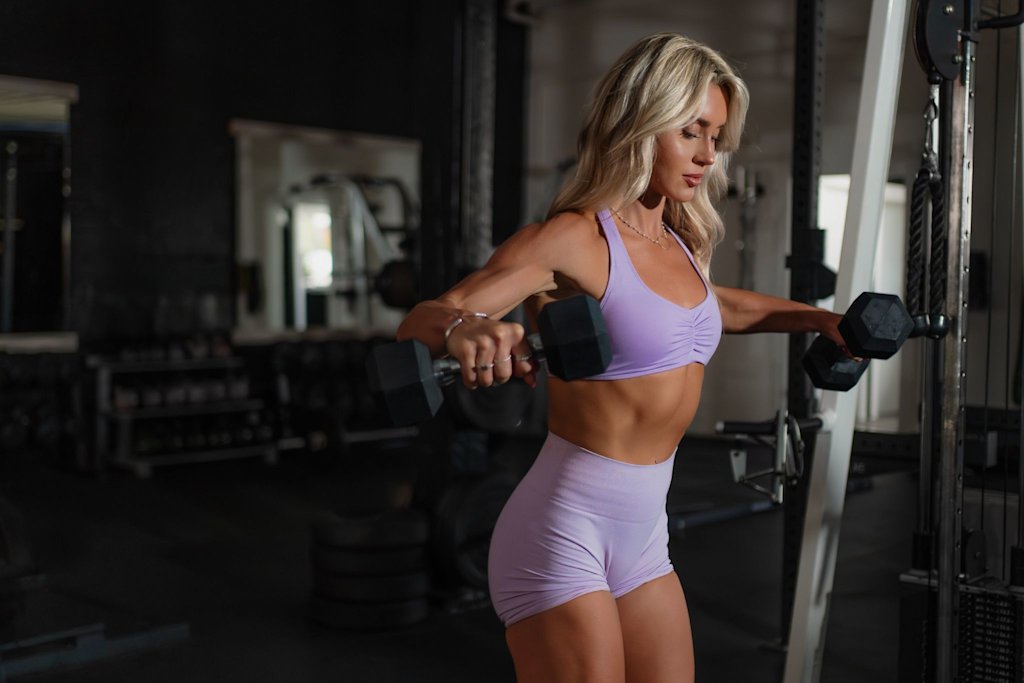
Typing, driving, scrolling, lifting, sitting on the couch... So much of what we do and how we move in everyday life pulls your arms forward, which leaves the small muscles at the back of your shoulders not doing a whole lot.
Rear delts are one of the most undertrained muscles in women's training, but you can easily target them with exercises like reverse flys, face pulls and wide-elbow rows. And no, you don't need an entire workout dedicated to these moves - two or three sets of one of them in each upper body session is enough for most people to build strength.
The humbling thing with these exercises is that you'll need to go lighter than you think with your weights. Your rear delt is a small muscle, and when the weight is too heavy, your upper back and arms will start to take over. To get your rear delts actually doing the work, you need to use a weight that won't require you to recruit other muscles to move it. If you normally do bent-over rows with 15 to 20 lb dumbbells, starting your reverse fly with 3 to 5 lb is completely normal!
What are your rear delts, and why are they worth training?
Your rear delts (posterior deltoids) are the back third of your shoulder muscle, and their main job is pulling your arm backwards and out to the side. Your deltoid has three sections: the front delt, which helps you press and lift your arm forward; the side delt, which lifts your arm out to the side; and the rear delt, which sits behind your shoulder joint.
The problem is that you can train your shoulders regularly but completely neglect your rear delts. When the American Council on Exercise tested 10 popular shoulder exercises, the researchers pointed out that a classic routine of presses, front raises and lateral raises works the front of the shoulder twice without working the back at all. They also recommended training the rear delts first in a shoulder session, because they're typically the weakest part of the shoulder.
Here's why rear delt strength matters in real life:
More balanced shoulders. If you do push-ups, presses and shoulder workouts but never train the back of your shoulder, the front tends to get stronger while the back lags behind.
More stable pressing. Strong rear delts help hold your shoulder steady during moves like the shoulder press, so you can lift with more control.
Easier everyday pulling. Starting a lawnmower, pulling a stroller out of the car, reaching back for your bag on the back seat; your rear delts come to the party for all of it.
A rounder shoulder shape. If you're building muscle, the rear delt helps fill out the back of the shoulder, so it looks strong from the side as well as the front.
The 7 best rear delt exercises to try
The seated rear delt raise, the bent-over reverse fly and the rear delt row are the three we'd start with, because they need nothing more than a pair of light dumbbells. If you train in a gym, you can also use a cable machine. If you're working out at home with no dumbbells, a resistance band covers you for the band pull-apart, face pull and reverse fly.
Seated bent-over reverse fly
Sit on the end of a bench or a sturdy chair (a dining chair works fine) with your feet flat on the floor and a light dumbbell in each hand. Hinge forward from your hips until your chest is close to your thighs, keeping your back long rather than rounded. Let your arms hang down beside your calves with your palms facing each other and a soft bend in your elbows. Keeping that bend fixed, lift the dumbbells out to the sides until your arms are roughly level with your shoulders, like you're opening a pair of wings. Pause for a second, then lower slowly back down.
This is the exercise that produced the highest rear delt activation in the ACE shoulder study, and sitting down takes your lower back out of the equation, which makes it a really good starting point.
Muscles worked: rear delts, middle traps, rhomboids (the muscles between your shoulder blades).
Form tip: think about pushing the dumbbells out towards the walls on either side of you, rather than lifting them up towards the ceiling. This keeps the work in the back of your shoulder instead of your upper traps and neck.
When you're ready for more: go heavier, or add a two-second pause at the top of each rep. For something different, try a dumbbell YTW.
Bent-over reverse fly
Stand with your feet hip-width apart and a dumbbell in each hand. With a slight bend in your knees, hinge forward from your hips (push your hips back towards the wall behind you) until your torso is close to parallel with the floor. Let your arms hang directly below your chest with your palms facing each other. Keeping a soft bend in your elbows, lift the dumbbells out and up until your arms are in line with your shoulders, then lower them slowly back to the start.
If you don't have dumbbells, you can do this with a resistance band: stand on the middle of the band with both feet and hold one end in each hand before raising your arms up to the sides.
Muscles worked: rear delts, middle traps, rhomboids, plus your hamstrings, glutes and lower back working to hold you in the hinge.
Form tip: keep your neck in line with your spine by looking at the floor about a foot in front of your toes. If your lower back gets tired before your shoulders do, switch to the seated version above.
When you're ready for more: go heavier, or slow down the lowering phase to a count of three.
Rear delt row
Set a bench to an incline of about 45 degrees and lie face down on it, with your chest against the pad and your feet on the floor. Let your arms hang straight down holding a barbell or a dumbbell in each hand, palms facing your feet. Row the barbell or dumbbells up by bending your elbows out to the sides (rather than tucked into your body), until your upper arms are in line with your shoulders and your elbows are bent to roughly 90 degrees. Lower slowly back down.
This looks a lot like a chest-supported dumbbell row, but the wide elbows shift more of the work into the back of your shoulder. In the ACE study, it came a close second to the seated rear delt raise for rear delt activation.
Muscles worked: rear delts, side delts, middle traps, rhomboids, biceps.
Form tip: your upper arms should stay at a right angle to your body the whole time, with your forearms pointing down at the floor. If your elbows drift down towards your ribs, it turns into a regular row.
When you're ready for more: go heavier!
Cable rear delt fly
Set both pulleys of a cable machine to shoulder height with no attachment (you'll hold the cable ends or the small balls directly). Stand in the middle and grab the left cable with your right hand and the right cable with your left hand, so the cables cross in front of you. Take a step back so there's tension on the cables, with your arms straight out in front of you at shoulder height. Keeping a soft bend in your elbows, pull your arms out and back until they're in line with your body, then slowly return.
Cables keep tension on the muscle the whole way through the movement, which is why we LOVE this one once you're comfortable in the gym.
Muscles worked: rear delts, middle traps, rhomboids.
Form tip: keep your shoulders down and away from your ears. If you feel it more in your neck than the back of your shoulders, lighten the weight.
When you're ready for more: go heavier, or try a single-arm cable rear delt fly, standing side-on to one pulley.
Face pull
Attach a rope to a cable machine at about forehead height. Hold one end of the rope in each hand with your palms facing each other and your thumbs pointing towards you. Step back until your arms are straight and there's tension on the cable. Pull the rope towards your face, separating your hands as you go and bending your elbows out to the sides, until your hands are beside your ears (think about the double-biceps pose). Pause, then slowly straighten your arms.
At home, you can loop a resistance band around a sturdy pole or door anchor at the same height, or sit on the floor with your legs outstretched and wrap a long resistance band around your feet.
Muscles worked: rear delts, middle traps, rhomboids, and the small rotator cuff muscles that rotate your arm outwards.
Form tip: keep your elbows at or slightly above your hands throughout. Stand tall rather than leaning back, which is a sign you need a lighter weight.
When you're ready for more: go heavier, or add a two-second hold at the end of each pull.
Band pull-apart
Stand tall and hold a light resistance band in front of you at shoulder height, with your arms straight and your hands about shoulder-width apart (palms facing down). Pull the band apart by moving your hands out to the sides until the band touches your chest, keeping your arms straight but not locked. Slowly bring your hands back to the start.
This is a great option if you don't have much space or equipment, or you want something you can do in a two-minute break between meetings.
Muscles worked: rear delts, middle traps, rhomboids.
Form tip: keep your ribs down and resist the urge to arch your lower back as the band gets harder to stretch.
When you're ready for more: use a heavier band, hold your hands closer together on the band, or turn your palms up to change the angle.
Dumbbell 45-degree superman
Set an incline bench to a 45-degree angle and lie face down on it, with your chest at the top of the bench and your hips at the bottom. Let your arms hang down towards the floor with a dumbbell in each hand. Aim for a straight line from your head to your heels, so your spine stays neutral (not arched or rounded). Using your upper back and rear delts (the back of your shoulders), lift your arms out to the sides, squeezing those muscles at the top. Then lower your arms back to the start with control.
Lying on the bench means you don't have to hold yourself in a hinge, so you can focus on the back of your shoulders. It's a great choice if your lower back tends to get tired during bent-over moves.
Muscles worked: rear delts, middle traps, rhomboids (the muscles between your shoulder blades).
Form tip: keep your neck neutral by looking down at the floor, rather than lifting your head to look forward. Move slowly and smoothly, with no jerking or swinging; if you need momentum to get the dumbbells up, they're too heavy. Everyone's range of motion is different, so build into a bigger range gradually over time and don't push past any discomfort.
When you're ready for more: go heavier, or hold at the top of each rep for two to three seconds.
How often should you train your rear delts, and how heavy should you go?
Two to three times a week is plenty for most people, with two to four sets of 12 to 20 reps of one rear delt exercise in each upper body or full body session. Because the rear delt is small, higher reps with a lighter weight tend to work better than heavy sets of six or eight, where bigger muscles start to take over.
The good news is that lighter doesn't mean less effective (or that your upper body is weak). A review of 21 studies found that lighter and heavier weights built muscle similarly, as long as the sets were challenging. So pick a weight where the last two or three reps of each set feel hard, but your form still looks the same as it did on rep one.
A few practical things that can help:
Do them first. If rear delts are your priority, put them at the start of your session while you're fresh, as the ACE researchers suggest.
Know where you should feel it. You're aiming for a burn at the back of your shoulder. If you mostly feel it between your shoulder blades or in your neck, lighten the weight and think about moving your arms out rather than squeezing your shoulder blades together.
Progress gradually. When you can do 20 clean reps, it's time to go heavier. Small dumbbells often jump in 2 to 5 lb increments, so add reps first, then weight. Our guide to progressive overload explains how.
Rotate your exercises. Doing a different rear delt exercise every few weeks keeps things interesting, and enjoying your training is a perfectly good reason to switch things up.
Where to start if you only remember one thing
Pick one rear delt exercise that works with your equipment and space, stick to a weight that allows you to feel it in the right place, and do two or three sets of 12 to 20 reps at the start of every upper body session. Voila. You don't need a dedicated rear delt day, a complicated routine or heaps of equipment.
If you'd like someone else to do the planning, rear delt moves like the bent-over reverse fly are already built into many Sweat programs, alongside the pressing and pulling that keep your shoulders balanced!
A more empowered you starts with Sweat, and our editorial team is here to bring you the latest fitness tips, trainer recommendations, wellbeing news, nutritional advice, nourishing recipes and free workouts.
* Disclaimer: This blog post is not intended to replace the advice of a medical professional. The above information should not be used to diagnose, treat, or prevent any disease or medical condition. Please consult your doctor before making any changes to your diet, sleep methods, daily activity, or fitness routine. Sweat assumes no responsibility for any personal injury or damage sustained by any recommendations, opinions, or advice given in this article.
Fitness