Fast-Digesting Carbs Aren't The Bad Guys! Here's When They Help
What fast-digesting carbs are, the best ones to grab and when they're worth eating before, during and after a workout.

November 6, 2026 - Updated November 6, 2026
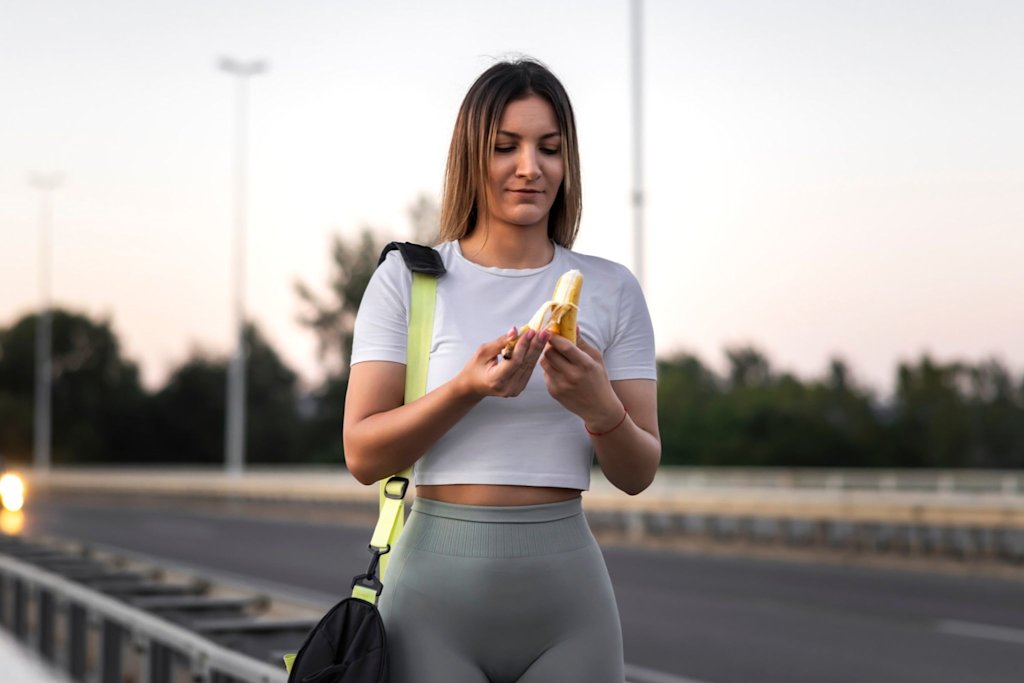
In the moments when you're going to start a workout in 40 minutes and you haven't eaten since lunch, that's exactly what fast-digesting carbs are for. They're low-fiber, low-fat carbohydrates your body turns into usable energy quickly, like a ripe banana, white toast or a crumpet with jam, a spoonful of honey or a handful of pretzels. Eat roughly 15 to 30 grams of them 30 to 60 minutes before you train and you'll have energy to work with, without that heavy feeling in your stomach.
If you've spent years hearing that white bread and honey are the "bad" carbs that don't offer any nutritional value, this might feel a bit backwards. For your everyday meals, it's definitely true that slower-digesting carbs like oats, brown rice and beans are still the better, more nutritious choice. But in the hour before a workout, the low fiber that makes white toast less filling at lunch is exactly what makes it useful for quick energy. Fast carbs have a specific job, and they're very good at it.
You'll also need them less often than the sports nutrition aisle suggests. If you ate a proper meal two or three hours ago and you're heading into a 30-minute strength session, you don't need a gel, a pre-workout drink or anything special. A banana is plenty (we've rounded up more pre-workout snack ideas here), and sometimes you won't need anything at all. Here's how to tell the difference, and what we'd actually grab!
What are fast-digesting carbs?
Fast-digesting carbs are carbohydrates that break down into glucose quickly, so they reach your bloodstream (and your working muscles) faster than other foods. You'll also see them called simple carbs, fast-acting carbs or high-glycemic carbs.
What makes a carb fast or slow mostly comes down to what's travelling with it. Fiber, fat and protein all slow digestion, which is why a bowl of high-fiber oats keeps you full all morning, and a white bagel doesn't. Take those away and you're left with carbs your body can use almost straight away.
The glycemic index (GI) can help to get your head around this. It ranks foods from 0 to 100 by how quickly they raise blood sugar, with pure glucose at 100. Fast-digesting carbs sit at the higher end. You don't need to memorize any numbers to know what to eat. If a food is low in fiber, low in fat and easy to eat in a hurry, it's probably fast.
Carbs are your body's preferred fuel for anything that gets your heart rate up, from a HIIT workout to a heavy leg day. Your muscles store them as glycogen, and fast carbs are simply the quickest way to top that tank up when you don't have much time.
When fast-digesting carbs help (and when you can skip them)
Fast-digesting carbs are most useful when you're short on time or short on fuel. Here's when we'd reach for them:
Early morning workouts. If your alarm goes off at 5:45 for a 6:30 workout, a full breakfast isn't realistic (and you might not feel like eating then anyway). Half a banana or a slice of toast with honey gives you something to work with, without sitting heavy in your stomach.
When it's been a while since you ate. The classic example of this is the after-work session. Lunch was at 12:30, it's now 5:30, and you're running on fumes. Some quick carbs on the way to the gym can be the difference between a solid workout and dragging yourself through it.
Long or hard sessions. For anything over about an hour (a long run, a big hike, a Hyrox event), your glycogen starts running low. The International Society of Sports Nutrition recommends around 30 to 60 grams of carbs per hour during long, intense exercise, and fast carbs are the easiest way to get them in on the move.
Straight after training. Your muscles are primed to restock glycogen after a workout, and pairing quick carbs with protein can help with recovery. Think chocolate milk, a smoothie with banana and honey, or a turkey sandwich on white bread.
And here's when you can skip them. If you ate a proper meal in the last two to three hours and your workout is 45 minutes or less, you're already fueled. Mayo Clinic notes that a snack eaten right before a workout under 60 minutes probably won't add much energy. The same goes for a walk, a yoga flow or a mobility session. If you feel good and you're not hungry, you don't need to eat for that kind of movement. Listen to your body!
The one thing we'd definitely steer you away from is pushing through a hard session on empty because you think it's good for you. For most people, it isn't (we dig into this in our article on fasted cardio). If you regularly feel dizzy, shaky or flat halfway through a workout, under-fueling is one of the first things we'd look at.
The 12 best fast-digesting carbs to eat before a workout
The best fast-digesting carbs are the ones you already have in the pantry! A ripe banana, white toast or a crumpet with jam or honey will do the same job as most products marketed for workouts, for a fraction of the price.
| Food | Roughly how many carbs | Best for |
|---|---|---|
| 1 medium ripe banana | 27 g | Almost any workout. Our first pick |
| 1 slice white toast + 1 tbsp jam or honey | 27-30 g | Early morning sessions |
| 1 tbsp honey | 17 g | When you've only got 5 to 15 minutes |
| 2 rice cakes + 1 tbsp jam | 28 g | A light, crunchy option at your desk |
| 2 Medjool dates | 36 g | Longer or harder sessions |
| 1 applesauce pouch | 12-15 g | Sensitive stomachs; easy to keep in your gym bag |
| 1 oz pretzels (a small handful) | 23 g | Hot days or sweaty sessions, thanks to the salt |
| Half a plain white bagel | 25 g | When you've got 60 to 90 minutes to digest |
| 1 cup (8 oz) orange juice | 26 g | Mornings when you can't face solid food |
| 20 oz sports drink | 34 g | During workouts longer than an hour |
| 1 cup cooked white rice | 45 g | A pre-workout meal 1 to 2 hours out |
| 1 energy gel | 20-25 g | During long runs or rides |
Carb counts are approximate, based on USDA FoodData Central. Check the label on packaged foods, as brands vary.
A few things worth knowing:
Riper bananas digest faster. As a banana ripens, more of its starch turns into sugar. A spotty banana is quicker fuel than a green-tipped one, and usually easier on your stomach too.
Keep it plain. White toast with jam counts as a fast carb. White toast with avocado and two eggs is a delicious breakfast, but it'll take a few hours to settle. Save the fat, fiber and protein for your meal after.
Liquid carbs are fastest of all. This is why gels are so effective for marathon runners, but most people don't need a sports drink or gel before a workout.
How much to eat, and when
For most workouts, 15 to 30 grams of fast-digesting carbs, eaten 30 to 60 minutes before you start, is a good place to begin. That's one banana, or a slice of toast with honey. If you're heading into something longer or more intense, you can go up towards 30 to 60 grams.
The closer you are to your workout, the smaller and simpler your snack should be. Here's how we'd plan it:
| Time before your workout | What to eat |
|---|---|
| 3 to 4 hours | A full meal with slow-digesting carbs, protein and some fat like chicken, rice and veggies |
| 1 to 3 hours | A smaller meal or bigger snack, like a bagel with a little peanut butter, or yogurt with fruit |
| 30 to 60 minutes | Fast-digesting carbs only, around 15 to 30 g. A banana or toast with jam |
| 5 to 15 minutes | Something tiny and quick if you really need it, like a spoonful of honey or a few sips of juice |
| During (workouts over 60 minutes) | 30 to 60 g of carbs per hour from a sports drink, gel, dates or a banana |
| After | Carbs plus protein within about two hours, like a smoothie or a sandwich |
These timings line up with the guidance from Mayo Clinic and the International Society of Sports Nutrition, and with how we build our pre-workout meals. Use them as a starting point, then adjust as everyone's bodies are different. Some people can eat a banana 15 minutes before burpees and feel great. Others need a full hour. If you get a stitch, bloating or nausea, try eating a little earlier or a little less next time.
One more tip if you're training for an event: practice your fueling in training first. Race morning is not the day to find out how your stomach feels about energy gels!
Are fast-digesting carbs bad for you?
Bad for what? No, they don't offer much nutritional value, but they're fantastic for quick energy! Eating them to fuel your workouts will help you progress, not undo your hard work. We don't sort foods into "good" and "bad" piles at Sweat, and white toast is a great example of why. Whether a food helps you depends on when you eat it, why you're eating it, and what else you're eating that day.
Where fast carbs are less helpful is as the centerpiece of every meal. Because they're low in fiber, they won't keep you full for long, and most of us already eat less fiber than we need. So for breakfast, lunch and dinner, we'd still lean on slower-digesting carbs like oats, whole grains, potatoes with the skin on, beans and veggies. Then use fast carbs as a tool around training.
If you're trying to lose fat, you don't need to cut carbs out. Fat loss comes down to your overall eating pattern across days and weeks, not the banana or toast you have before a workout. Fueling well can even help, because it gives you the energy to train harder and get more out of each session.
If you have diabetes or another condition that affects your blood sugar, talk to your doctor or a dietitian about how to fuel around exercise, as your needs may be different.
Is it a fast-digesting carb? Your common questions answered
Are bananas fast-digesting carbs? Yes, and the riper they are, the faster they digest. A banana is our go-to pre-workout carb because it's cheap, portable and comes in its own wrapper.
Are oats fast-digesting carbs? Not really. Rolled and steel-cut oats are high in fiber, so they release energy slowly. That makes them great two to three hours before a workout, but less ideal 30 minutes before. Instant oats digest a little faster if you want a warm option closer to training.
Are apples fast-digesting carbs? They're somewhere in the middle. The fiber in the skin slows things down, so an apple won't hit as quickly as a banana. An apple would not be the first thing we'd reach for. Applesauce is the faster version.
Are rice cakes fast-digesting carbs? Yes. Plain puffed rice cakes are very quick to digest. Top them with jam or honey for more carbs, rather than peanut butter, if you're eating close to your workout.
Are dates fast-digesting carbs? Yes. They're mostly natural sugar with a little fiber, which makes one or two a great option before or during a long session.
Are potatoes fast-digesting carbs? White potatoes, especially mashed or without the skin, digest fairly quickly. Sweet potatoes are a bit slower thanks to their fiber. Either works well as part of a meal a couple of hours before training.
Are bagels fast-digesting carbs? A plain white bagel is. A whole wheat or seeded bagel will digest more slowly.
Where to start if you only remember one thing
If your workout starts within the hour and you haven't eaten for a few hours, grab a ripe banana or a slice of toast with honey. That's it. You don't need anything fancier for the vast majority of workouts.
Save the slower carbs, protein and healthy fats for your main meals, and use fast-digesting carbs as the quick top-up they're designed to be. Then pay attention to how you feel. If your energy holds up through your last set and your stomach stays settled, you've found your sweet spot.
Looking for workouts to put that energy into? The Sweat app has programs for every level, from 28-minute strength sessions to running plans, plus recipes to help you fuel around them.
Erin is a writer and editor at Sweat with years of experience in women's publishing, the fitness industry, media and tech. She's passionate about the power of movement, and you can often find her on a yoga mat, a hike, a dance floor, in the ocean or the gym.
* Disclaimer: This blog post is not intended to replace the advice of a medical professional. The above information should not be used to diagnose, treat, or prevent any disease or medical condition. Please consult your doctor before making any changes to your diet, sleep methods, daily activity, or fitness routine. Sweat assumes no responsibility for any personal injury or damage sustained by any recommendations, opinions, or advice given in this article.
Nutrition