Menopause Weight Gain: Why It Happens And What Actually Helps
Women's health educator Sheridan Skye explains what's really behind menopause weight gain, why it shows up around your middle, and the handful of things that genuinely help.

September 28, 2026 - Updated September 28, 2026
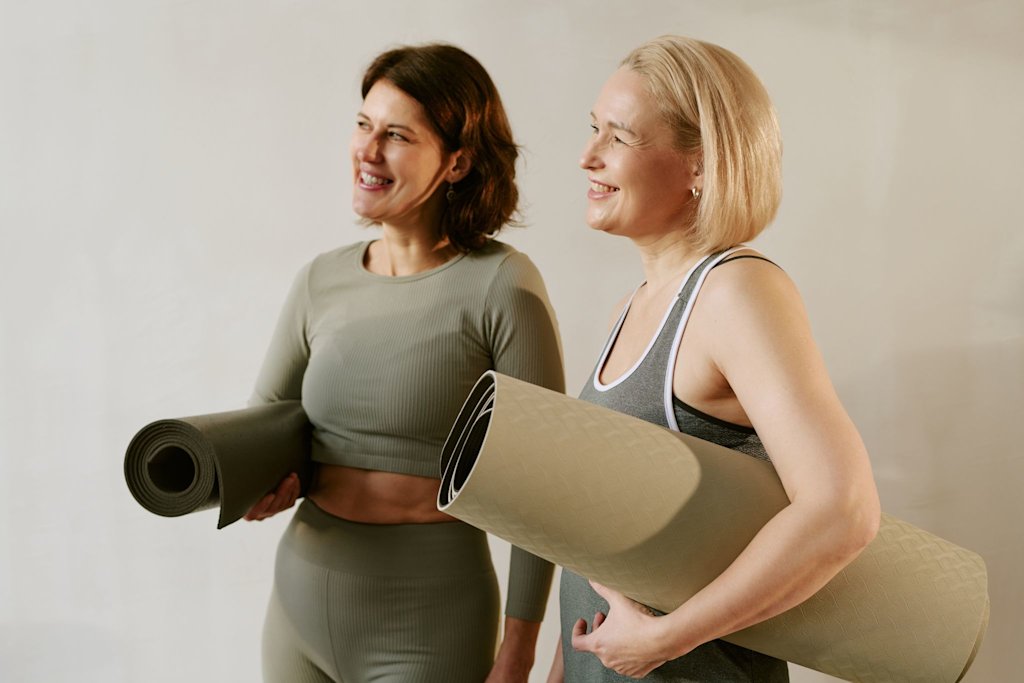
Menopause gets a bad rap for many reasons, particularly weight gain. But it's important to understand that some of the weight gain women experience in their forties and fifties isn't directly caused by menopause.
Women tend to gain weight slowly and gradually right through adulthood. Mayo Clinic puts it at around 1.5 pounds (0.7 kilograms) a year through your fifties, and the SWAN study, which has followed thousands of women through the menopause transition, found much of that overall gain appears to be related to natural ageing rather than menopause itself.
So whether this sounds like good news to you or not, menopause isn't the villain in every story. But that doesn't mean you're going crazy or that nothing is changing, and it doesn't explain why so many women tell us the same thing: they haven't changed how they eat or train, their clothes fit differently anyway, and they just don't feel like themselves.
Those parts are all very real. Here's what's actually going on, and what can help.
Does menopause cause weight gain, or is it just getting older?
It's usually a bit of column A and a bit of column B.
Menopause doesn't flip a switch and suddenly slow your metabolism. What's more likely for a lot of women is that several small changes happen at once during perimenopause and menopause, and those changes compound over time.
This is how Sheridan Skye, registered nurse, nutritionist, personal trainer and women's health educator behind our Perimenopause and Menopause Masterclass, approaches it with her own clients.
“When most women come to me struggling with weight gain or changes in body shape, I don't sit down and have a conversation with them about calories. I'm asking them, how is your sleep? How is your stress? How often are you doing strength training? How are your relationships? How is your mental health?” says Sheridan.
Yes, sometimes it does come down to calories alone. But often it doesn't, and the more useful move is to zoom out.
Why menopause changes where you store fat, not just how much
This is the change most women notice first, and it's the one that can happen even when the scales barely move.
During the menopause transition, women become more likely to store fat around the abdomen, including around the abdominal organs, rather than predominantly around the hips and thighs. That type of fat is called visceral fat.
“This shift can feel significant because it may change your shape and how your clothes fit during this stage of life, even if the scales haven't moved much,” says Sheridan in episode 2 on weight gain and metabolism.
It's worth knowing for health reasons too, not just fit-of-your-jeans reasons. Fat stored around the abdomen is more strongly associated with cardiovascular disease and type 2 diabetes than fat stored under the skin. That's a strong reason to pay attention and really look after your health, not to immediately panic.
Why it feels harder even when nothing has changed
If you're eating the same and training the same and it isn't "working" the way it used to, there's usually a chain reaction behind it.
Poor sleep in midlife is often the first domino. Research shows around 40 to 60% of women in perimenopause and menopause report difficulties with sleep, and hot flushes and type: entry-hyperlink id: 347SQIHOm60HM9VU1EH70E affect around 80% of women during midlife.
Broken sleep affects your hunger hormones, which can lead to more snacking or an increased calorie intake. Feeling tired affects your recovery, which can make your workouts shorter, less frequent or less intense. That changes your overall energy expenditure without you ever consciously deciding to do less.
None of that shows up on a calorie tracker or feels that dramatic, but it can really compound over weeks, months and years.
“If you're experiencing symptoms that are affecting your sleep, your energy, your appetite, your mood, your recovery or your ability to exercise, maintaining your weight may genuinely feel harder than it did before. But that also doesn't mean you're doing something wrong. And it doesn't mean you've suddenly lost your discipline,” says Sheridan.
How to lose weight during menopause: where to actually start
There's no menopause-specific diet you suddenly need to follow, and there's no perfect workout routine. But a few things do a lot of the heavy lifting, and our programs Perimenopause Strong and Menopause Strong have been designed for your changing body. Here's what we recommend:
Strength train two to three times a week. Muscle mass declines with age, and muscle is one of the main places your body uses glucose, which matters more when fat is shifting to your midsection. Your muscles respond to resistance training throughout your life, so it's never too late to start or get back into it. Starting in your forties, fifties or sixties still works. If you're not sure where to begin, our guide to type: entry-hyperlink id: zam26CZBgjmZTRTmu1SeO is a good starting point, and type: entry-hyperlink id: 1WRRFJxpqLAtAwESktJ0gH is the principle that keeps it working over time.
Eat more protein than you think you need. As we get older, our muscles become a little less responsive to the protein we eat. For active women, a useful target is around 1.2 to 1.6 grams per kilogram of body weight a day. At 70kg that's roughly 84 to 112 grams. Spread it across the day (try to include a good source in every meal) as your body can only absorb so much at once, and lean on type: entry-hyperlink id: dWEieAsoQeSAITN8bofDL you actually like.
Treat sleep as part of your training. Sleep impacts so many parts of your health and daily life, so prioritise it. If poor sleep is persistent, it's worth working out what's driving it rather than accepting it as something you have to put up with. For insomnia specifically, Sheridan says the treatment with the strongest evidence is cognitive behavioural therapy for insomnia (CBT-I).
Don't skip cardio because of cortisol. You've probably seen the claim that HIIT or running raises cortisol and makes type: entry-hyperlink id: 5x78mmwo8WIbHsJG2JQrFy worse. Cortisol rising during exercise is normal, and it comes back down afterwards. The Physical Activity Guidelines for Americans recommend 150 minutes of moderate activity a week, or 75 minutes of vigorous activity, plus two strengthening sessions. Cycling counts. Swimming counts. Even type: entry-hyperlink id: uegR2uGiIFd8miJy1CGEk counts, so pick what you'll keep doing. If you enjoy HIIT, enjoy it a couple of times a week. If you hate it and it makes you feel exhausted, skip it!

Does MHT help with menopause weight gain?
As Sheridan explains in episode 11 on menopausal hormone therapy (MHT) - which you might know as HRT - MHT is the most effective treatment we have for hot flushes and night sweats, and it can help prevent bone loss.
But it isn't a weight-loss treatment. Where it can support weight management indirectly is by improving your sleep and symptoms, which makes everything else (training and eating well) easier to do consistently.
Whether MHT is right for you is a conversation for you and your doctor. The same goes for GLP-1 medicines, which can be effective for the right person with guidance from your healthcare professional. As Sheridan points out, significant or rapid weight loss of any kind costs you lean muscle as well as fat, so resistance training and adequate protein become even more important, not less.
How long does menopause weight gain last?
Unfortunately, there's no nice, neat end date, which can be frustrating to hear. Perimenopause can last several years, and hot flushes and night sweats last around seven years on average, with around one in four women still experiencing bothersome symptoms into their sixties. We've covered the whole timeline in more detail in type: entry-hyperlink id: 4pHKdDK6Fpc9JA1CbvcSOA.
But we want you to know that changes to your body composition aren't a phase you wait out. They respond to what you do. You can build muscle at any age, and your body will thank you for it for the rest of your life. Strength gains don't have an expiry date.
The conversation we're not having enough
We don't expect our skin to stay wrinkle-free. We don't expect our bodies to look exactly as they did at 25. And yet when it comes to weight, waist and shape, women are still handed the message that these things shouldn't change. You grow and change so much as a person throughout your life, yet your body shouldn't change? Insane. Ridiculous. And Sheridan has such an amazing perspective on this.
“If we're fortunate enough to live a long life, our bodies will change. So perhaps one of the greatest gifts we can give ourselves is to shift some of our attention away from how our bodies look and towards what our bodies allow us to do,” says Sheridan.
Strong enough to carry your grandchildren. Fit enough to travel. Capable enough to get up off the floor.
Where to start if you only remember one thing
Menopause weight gain isn't imaginary, and it isn't a discipline problem. It's a combination of normal ageing, a genuine shift in where you store fat, and a handful of symptoms that can quietly make everything harder.
If you only do one thing, make it resistance training, and nourish your body with plenty of protein and fibre.
Sheridan walks through all of this in Sweat's Perimenopause and Menopause Essentials Masterclass, an 11-episode series covering weight gain and metabolism, sleep, brain fog, bone health, nutrition, MHT and more. And if you're keen to start moving, Perimenopause Strong and Menopause Strong in the Sweat app will teach you how to resistance train for where you are right now, and keep challenging you as you get stronger.
Erin is a writer and editor at Sweat with years of experience in women's publishing, the fitness industry, media and tech. She's passionate about the power of movement, and you can often find her on a yoga mat, a hike, a dance floor, in the ocean or the gym.
* Disclaimer: This blog post is not intended to replace the advice of a medical professional. The above information should not be used to diagnose, treat, or prevent any disease or medical condition. Please consult your doctor before making any changes to your diet, sleep methods, daily activity, or fitness routine. Sweat assumes no responsibility for any personal injury or damage sustained by any recommendations, opinions, or advice given in this article.
Disclaimer: This content is provided for general educational and informational purposes only. It is not medical advice, diagnosis, or treatment, and does not create a doctor-patient relationship. Because individual circumstances and medical history differ, always consult your healthcare provider before making decisions about your health, including hormone therapy, medications, or supplements. If you are experiencing a medical emergency or urgent symptoms, contact your healthcare provider or emergency services immediately. Medical understanding of menopause and related treatments continues to evolve, and this content reflects information available as at the date of publication. While we make reasonable efforts to ensure accuracy, we do not guarantee its accuracy, completeness, or currency.
Wellbeing